

The best foods rich in omega-3 fatty acids are found in oily fish (sardines, mackerel) and plant-based sources such as rapeseed oil or flax seeds. A varied diet protects your cardiovascular health .
However, less than 5% of French people meet the recommended ALA intake according to ANSES standards. (Source: Cairn.info, 2015). We sort through each fatty acid source for you to optimize your vitality.
Key takeaways:
- Marine priority: Only oily fish (sardines, mackerel) directly provide ready-to-use EPA and DHA.
- The plant advantage: Flax seeds and rapeseed oil provide ALA, but the internal transformation into DHA remains limited to less than 10%.
- Extreme fragility: These fatty acids are sensitive to heat and air; favor cold-pressed virgin oils and gentle cooking methods.
- Supplementation: If you consume fewer than two portions of fish per week, a food supplement remains the safest option to make up for the deficiency. Discover how to choose the right one .
- What is the richest food in omega-3? The richest food in omega-3, across all categories, is flaxseed oil (≈ 53 g of omega-3 ALA/100 g).
Top 7 sources of Omega 3
In short: The most concentrated foods combine plant sources (flax, chia) and marine sources (mackerel, sardines). However, your body utilizes EPA and DHA from oily fish better than plant-based ALA for its direct brain and cardiovascular needs.
To balance your diet, you need to choose from these two families of omega fatty acids . Here are the best current options to enrich your daily meals:
| Food | Omega-3 content / 100 g | Fatty Acid Type |
|---|---|---|
| Linseed oil (raw) | 53.3 g | ALA (Vegetable) |
| Cod liver oil | 19.5 g to 23 g | EPA + DHA (Marine) |
| Flax seeds (ground) | 22.8 g | ALA (Vegetable) |
| Chia seeds | 17.8 g | ALA (Vegetable) |
| Walnut oil | 11.5 g | ALA (Vegetable) |
| Cooked mackerel | 2.5 g to 4.5 g | EPA + DHA (Marine) |
| Sardine (in oil) | 1.7 g to 2.4 g | EPA + DHA (Marine) |
Data compiled according to ANSES/CIQUAL tables (2025). Note: ALA must be converted by the body into EPA/DHA to become fully active on cardiac function.

Distinguishing ALA, EPA, and DHA for effective nutrition
Each fatty acid plays a specific role in your metabolism. ALA , derived from plants, is considered the only essential fatty acid , as our bodies cannot produce it. We must obtain it through diet or via a supplement.
Oily fish provide EPA (Eicosapentaenoic Acid) and DHA (Docosahexaenoic Acid) directly.
Although our liver can convert ALA into EPA and then into DHA, this conversion process remains very limited in humans. Therefore, varying our intake becomes a priority.
By incorporating these omega-3 rich foods into your diet, you optimize your chances of preserving your vision and arterial health in the long term.
Foods rich in omega-3 of marine origin
Large marine predators like tuna and swordfish often accumulate excessive amounts of heavy metals . For your well-being, we suggest choosing marine animals lower on the food chain. These species offer superior purity and help maintain your balance .
- Sardine (≈1 g/100 g): this champion fish delivers a high omega content while remaining safe from persistent contaminants.
- Mackerel (≈1.2 to 1.8 g/100 g): consuming this blue fat helps the smooth functioning of your cardiovascular system.
- Anchovies (≈2.8 g/100 g): these specimens contain a record amount of protective fatty acids for a minimal volume.
- Cod liver oil (≈19 to 23 g/100 g): this traditional food remains a valuable source of vitamin D and DHA.

The nutritional value of wild fish varies depending on the extraction method and the fishing area.
Our team's opinion is clear: this type of regular consumption is recommended to support your EPA and DHA levels. These oily fish play a concrete protective role in your daily diet. They help maintain stable blood pressure and actively contribute to maintaining your vision.
👉 Find our complete guide on the benefits of omega 3 .
Beyond the ocean, terrestrial resources offer interesting alternatives . Mastering the use of plant-based sources allows you to diversify your menus while maintaining a constant intake of polyunsaturated fatty acids.
Foods rich in plant-based omega-3 fatty acids
Human nutrition relies on the richness of plants to meet your physiological needs. Alpha-linolenic acid (ALA) falls into this category. Incorporating these foods, rich in natural fats, promotes a protective effect for your cell membranes on a daily basis.
Choose cold-pressed oils to guarantee the quality of their nutrients. These organic and delicate products do not withstand high temperatures well. We suggest consuming these oils raw , using a spoonful as a dressing for your salads or warm dishes.
Here are the best plant-based sources containing ALA (average content per 100g):
- Linseed oil: approximately 53 g
- Flax seeds (ground): approximately 23 g
- Chia seeds: approximately 18 g
- Walnut oil: approximately 10 g
- Rapeseed oil: approximately 9 g

Adding flax or hemp seeds to your meals strengthens your immune system . This nutritional routine offers a very beneficial anti-inflammatory effect. For every woman and man concerned about their health, these varied choices actively contribute to heart health.
Be aware that the body converts very little ALA into DHA. While vegetable oils remain a staple in your diet, newer, more direct marine options are gaining popularity. This is the case with microalgae, which are now emerging as a preferred alternative.
The Omega-3s of tomorrow: the microalgae boom
In short: Directly at the origin of the food chain, microalgae offer the purest DHA on the market in 2026. They guarantee a stable oil, free of marine pollutants, while respecting the balance of ecosystems.
Fish do not produce their own fatty acids; they obtain them from nature by consuming microalgae . By going back to this primary source, we capture the original nutrient. This plant-based alternative avoids any passage through the animal organism and reduces the number of intermediaries in the food chain.
Production in closed tanks ensures exceptional purity. According to a benchmark study ( Frontiers, 2024 ), this controlled environment eliminates the risks associated with heavy metals and organic pollutants. You thus benefit from a crystal-clear oil, naturally protected from global ocean contamination.
The Schizochytrium algae delivers a remarkable DHA content (40-55 g/100 g) , ideal for vegetarians and consumers concerned about seafood resources. In addition to its reassuring traceability, this plant-based source boasts excellent natural stability . It offers an effective option for your cardiovascular nutrition without the unpleasant aftertaste of fish.
The Schizochytrium algae may well be the richest food source of omega-3 fatty acids. The most effective and safe way to consume omega-3s from microalgae is in capsule form . Perfect for vegetarians, vegans, pregnant women, or anyone who doesn't eat enough oily fish.
How to avoid oxidizing your omega-3s during preparation?
These polyunsaturated fats are fragile . Heat, air, and light degrade them rapidly, transforming their intended benefits into rancid molecules. To maximize your actual intake, protecting the structure of omega-3-rich foods when preparing your meals is a priority.
We advise against ever heating rapeseed, walnut, or flaxseed oil. Reserve them exclusively for cold salad dressings. If you're preparing an easy salmon recipe, opting for gentle steaming or low-temperature cooking helps preserve the fatty acids.
Top 3 tips for storing food in the refrigerator
- Opt for opaque containers made of tinted glass to block the degrading effect of light rays.
- Carefully close the bottle after each use to minimize contact with atmospheric oxygen.
- Always place your bottles in the refrigerator as soon as they are opened to slow down the natural deterioration of the fats.
Adopting these simple steps ensures effective daily nutrition . Choosing your sources carefully and preparing them properly provides a solid foundation, but we observe that food alone sometimes struggles to meet optimal needs, making the question of supplementation relevant.
Nutrition vs. Supplementation: When food is no longer enough?
Your diet remains your primary source , but achieving a protective level of eicosapentaenoic acid (EPA) and docosahexaenoic acid (DHA) can sometimes be a technical challenge. Between the risks associated with heavy metals in large fish and the fragility of vegetable oils, maintaining a stable daily intake requires careful planning for your body.
We note that human nutrition guidelines recommend a daily intake of 500 mg of oil. If your diet doesn't include oily fish two to three times a week, your body struggles to compensate for this deficiency. Supplementation then becomes a valuable tool for maintaining cardiovascular health without unnecessary exposure to marine pollutants.
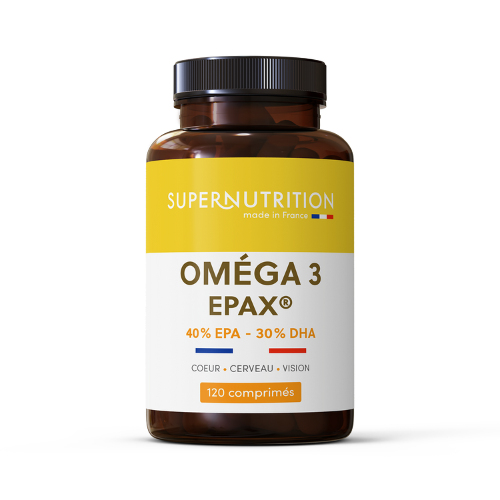
Our expert solution
To meet this specific need, we have selected Omega 3 Epax® . This dietary supplement offers a high-quality, purified oil, free of impurities and concentrated in active ingredients. Its formula safely promotes optimal heart and brain function.
See our Omega 3Choosing a certified product guarantees a consistent beneficial effect. Since polyunsaturated lipids are sensitive to the environment, their storage conditions directly impact the effectiveness of your treatment. Careful handling of your bottles or oils prevents the molecules from going rancid.
FAQ: Your frequently asked questions about Omega-3 rich diets
What are some foods rich in omega-3 for breakfast?
The simplest and most effective foods to enrich your breakfast with omega-3 are: chia seeds, ground flax seeds, flaxseed or rapeseed oil, walnuts, smoked salmon, and sardines. Discover our omega-3-rich breakfast recipes .
Can omega-3 fatty acids be found in eggs?
Yes, if the animal feed supply chain includes flaxseed (Bleu-Blanc-Cœur label). These eggs have a much higher level of polyunsaturated fatty acids than a regular egg, thus contributing to your nutritional balance.
Is olive oil rich in omega-3?
No, it mainly contains omega 9. It supports your cardiovascular health thanks to its resistance to cooking, but you must combine it with rapeseed or flaxseed oil for your essential fatty acid intake.
Should you eat the skin of the fish?
We recommend consuming it when it comes to small, wild-caught fish like sardines. The layers of fat located just under the skin contain a significant amount of DHA and EPA, which are beneficial to the body.
Does avocado contain omega-3 fatty acids?
Not really. Avocado is an excellent fatty fruit, rich in fiber and vitamin E, but its omega-3 content remains marginal. It mainly provides monounsaturated fats, similar to those in olive oil.
Which oil contains the most omega-3?
Flaxseed oil is the undisputed champion of the plant world. Just one tablespoon easily covers your basic ALA requirements. Remember that it is very delicate and must be consumed exclusively cold.
Can one meet their needs without supplements?
This is possible by consuming oily fish three times a week and using quality oils daily. However, in the face of thermal oxidation or lack of time, a dietary supplement guarantees a stable and pure intake.
Which fruit is richest in omega-3?
Kiwifruit and red berries like raspberries contain a small amount of antioxidants in their seeds. However, these levels are negligible compared to a handful of nuts. Fruits are primarily a source of additional antioxidants.
Which vegetable is rich in omega-3?
Lamb's lettuce comes out on top, followed by spinach and purslane. These leafy greens contribute modestly to your alpha-linolenic acid intake. They play a useful role when combined with more concentrated fat sources such as mackerel or seeds.
Security Council
Before starting any treatment, seek the advice of your doctor.
Want to continue reading?
-
What are the best omega-3 supplements available in pharmacies?
-
When is the best time to take omega-3 supplements?
- How much omega-3 should I take per day?
- What are the benefits of omega-3?
- Omega-3 capsules: how to avoid any danger
- What is the difference between EPA and DHA?
Sources cited in the content:


