

Key takeaways
- Recommended adult dosage: a daily intake of 250 to 500 mg of EPA + DHA.
- Number of omega-3 capsules per day: on average 1 to 3 capsules , depending on the concentration and brand of the supplement.
-
Adjustment according to the objective: the adult dosage may vary depending on the needs:
- 1000 mg per day for cardiovascular health support;
- 1,000 to 3,000 mg per day in case of inflammation or joint pain .
- Beyond 3,000 mg per day, medical advice is recommended.
According to EFSA, the ideal daily dose for optimal health is between 250 mg and 500 mg of EPA and DHA combined, which is generally 2 to 3 high concentration omega 3 capsules taken with a meal.
This need fluctuates depending on your lifestyle, diet, and health goals . While oily fish like sardines or mackerel remain staple sources, supplementation with a quality Epax product becomes necessary to achieve peak fitness by 2026.
Here's how to adjust your dosage without wasting your capsules.
How to calculate your ideal dose of omega-3 based on your goals?
In short: Your daily dose depends on the EPA/DHA ratio , not the weight of the oil. Aim for 250 mg of EPA+DHA for heart health and up to 2,000 mg for athletic recovery or mental balance. Choose 2 to 3 capsules of a concentrated oil to meet your needs without overloading your system.
Calculating your intake isn't about counting the number of capsules . Look at the label: the real benefit lies in the sum of eicosapentaenoic acid ( EPA ) and docosahexaenoic acid ( DHA ). A low-quality supplement often contains a lot of unnecessary fat for very few active nutrients.
| Target | Daily dose (EPA + DHA) | Capsule equivalent (Epax® dosage) |
|---|---|---|
| Cardiovascular health (EFSA) | 250 mg to 500 mg | 1 capsule |
| Sport and recovery | 1500 mg to 2000 mg | 2 to 3 capsules |
| Cognitive function and the brain | 500 mg (predominantly DHA) | 1 to 2 capsules |
| Inflammatory balance | 1000 mg to 3000 mg | 2 to 4 capsules |
| Clinical trials: depression, autoimmune disease, severe hypertriglyceridemia | Up to 5000 mg | Up to 7 capsules |
Supporting cardiovascular health
For normal heart function, the EFSA recommends a daily intake of 250 mg of EPA and DHA . This baseline helps maintain stable blood pressure and protects your arteries.
Regular omega-3 supplementation compensates for a diet low in oily fish such as mackerel or sardines.
What dosage is recommended for muscle building and recovery?
Athletes and sports enthusiasts have specific needs. A dose of 2000 mg per day (approximately 3 capsules) optimizes protein synthesis and reduces muscle soreness after intense physical activity. ( Source: Nutrients, 2024 )
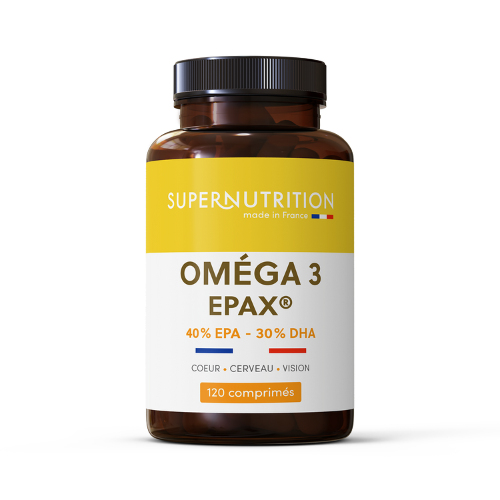
Our expert solution
To achieve this state without consuming excessive amounts of fat, we recommend Omega 3 Epax oil, known for its purity and ultra-effective concentration.
See our Omega 3Omega-3 dosage for mental health and cognitive well-being
Your brain is largely composed of lipids. DHA is the main fatty acid found in the membranes of gray matter cells. To optimize your cognitive alertness or reduce mild anxiety, aim for 500 mg of DHA per day.
This dosage supports brain plasticity and daily mood, especially during the winter months.
Addressing inflammation and joint pain
Modern diets suffer from an unhealthy ratio of pro-inflammatory to anti-inflammatory fats. By increasing your intake of long-chain omega-3 fatty acids, you promote the production of soothing molecules.
For a beneficial effect on your joints, a combined daily dose of 1,000 mg to 2,000 mg is often recommended by nutritionists.
Specific needs for pregnant women
During pregnancy, expectant mothers need to support the developing brain of their fetus. In addition to the usual adult intake, a supplemental 200 mg of DHA is recommended.
This helps with the development of the baby's nervous system and vision. Always check the quality of your oil to avoid any pollutants or heavy metals from wild fishing.
Timing of intake and absorption: Should they be taken in the morning or in the evening?

Take your capsules in the middle of a meal containing fats (butter, oil, avocado, eggs). The time of day is less important than the presence of fats to optimize absorption by your body and avoid any potential return of a fishy taste.
It doesn't matter whether you choose morning, noon, or evening. The human body doesn't have a specific storage button based on the time of day. Your top priority remains the composition of your meal at the time of consumption to guarantee a real beneficial effect on your health.
The fatty acids in your omega-3 capsule require other fats to be properly digested. The enzymes in your digestive system are only activated in the presence of food rich in lipids . Taking your capsules on an empty stomach with just a glass of water drastically limits their absorption.
Optimizing daily assimilation
If you have a sensitive stomach, avoid taking it right before bed. Even ultra-pure fish oil can cause mild reflux if you lie down immediately afterward. Taking it in the middle of lunch remains the most practical advice to ensure smooth and complete digestion. Here are the golden rules for effective consumption:
- Accompany your omega supplements with a complete meal to stimulate fat digestion.
- Prioritize regularity: a fixed daily dose stabilizes your blood levels in the long term.
- Avoid hot drinks immediately after taking the capsule to preserve its effectiveness.
- Spread out your intake if your nutritional needs exceed three units per day.
The benefits of supplementation require patience. The integration of DHA and EPA into your cells is a slow process . Unlike cod liver oil taken occasionally, a high-quality capsule incorporated into your nutritional routine has a lasting effect on your body.
Dangers and side effects: Is there an upper limit?
In short: EFSA sets the safe limit at 5,000 mg (5 g) of combined EPA and DHA per day. An intake exceeding your nutritional needs does not pose a major risk to the general population, but may lead to digestive discomfort or an unpleasant taste if the oil is of poor quality.
The European Food Safety Authority has validated the safety of high doses for adults. The scientific study ( EFSA Journal 9858, 2026 ) confirms that a daily intake of up to 5 g of supplements does not lead to a risk of spontaneous bleeding or blood pressure disturbances.
An excess can sometimes cause digestive problems. By choosing a natural triglyceride form rather than a synthetic one, you limit undesirable effects such as reflux. The capsule must protect the fatty acid from oxidation, as rancid oil is a more real risk than a slight overdose.
Some people taking anticoagulants should remain vigilant. Although studies are reassuring regarding blood function, medical advice is still necessary before starting a significant dose. The balance of the human body relies on precise nutrition rather than simply quantity.
A well-balanced intake supports long-term cardiovascular health. Aim for excellence with the Epax label to avoid pollutants and heavy metals. True safety lies in choosing a certified, concentrated product rather than accumulating low-quality capsules.
Consuming this dietary supplement as part of a varied diet ensures optimal health. Pay attention to your body's signals: a strong fishy taste often indicates poor-quality oil or improper storage, regardless of the dosage used.
Security Council
Before starting any treatment, seek the advice of your doctor.
Frequently Asked Questions: Your Supernutrition experts answer
What are the symptoms of omega-3 deficiency in adults?
A deficiency manifests as dry skin, brittle nails, or eye strain. Your concentration decreases and your mood fluctuates. Your body needs these fatty acids for normal brain and vision function.
How to calculate your omega-3 index?
This isn't a simple manual calculation. A healthcare professional uses a red blood cell test to measure the levels of EPA and DHA in your red blood cells. The ideal level is above 8% to protect your heart.
Can an overdose of omega-3 be pro-oxidant?
Yes, a massive excess combined with low-quality fish oil promotes oxidation. Always check the totox index and the presence of protective vitamin E in your dietary supplement to avoid any undesirable risks.
How many capsules are needed to compensate for a total absence of oily fish?
If you don't regularly eat mackerel or sardines, aim for 2 to 3 Epax omega-3 capsules per day. This dose provides approximately 1,000 mg of long-chain fatty acids, thus compensating for the complete lack of animal sources in your diet.
Why does the dosage vary between fish oil and krill oil?
Krill contains phospholipids that facilitate absorption. Less krill oil is consumed because its absorption is higher, even though its concentration of EPA and DHA per capsule remains lower than that of ultra-concentrated fish oil.
Can omega-3 capsules be opened and mixed with food?
You can open them, but the oil oxidizes quickly in the open air. The taste and smell are often very strong. We suggest swallowing them whole during a meal to protect the oil and aid digestion.
Is there a difference in dosage between men and women?
Yes, estrogen promotes the natural conversion of ALA to DHA. Men's needs are often higher to reach the same blood levels. Women need to increase their intake during pregnancy for fetal development.
Is it possible to take 3 omega-3 capsules in a single dose?
Taking 3 capsules at once with your main meal is effective. The presence of fats at this time optimizes the activity of digestive enzymes. This is sufficient to meet your daily nutritional needs without any constraints.
What are the differences between plant-based (ALA) and animal-based (EPA/DHA) omega-3 in terms of dosage?
The body is very inefficient at converting ALA (from flaxseed oil) into EPA and DHA. You would need to consume a massive amount of plant-based foods to obtain the same benefits as a single wild fish oil capsule. Direct DHA intake via capsules remains the best option.
How long should you take an omega-3 supplement?
Aim for a minimum 3-month course. This is the time required for the fatty acids to be absorbed into your cell membranes. Regular supplementation ensures optimal effectiveness for your body and overall well-being.
Do omega-3s help with weight loss if you take a lot of them?
They don't eliminate calories, but they optimize your metabolism and insulin sensitivity. Adequate intake helps regulate fat storage. Combine them with physical activity for an overall beneficial effect.
Want to continue reading?
-
What are the best omega-3 supplements available in pharmacies?
- Where can I find foods rich in Omega 3?
- What are the benefits of omega-3?
- What is the correct EPA/DHA ratio?
Sources cited:
-
EFSA, 2012 - EFSA assesses safety of long-chain omega-3 fatty acids
-
Nutrients, 2024 - Omega-3 Fatty Acid Supplementation on Post-Exercise Inflammation, Muscle Damage, Oxidative Response, and Sports Performance in Physically Healthy Adults


