

Omega-3 EPA and DHA nourish hair follicles, moisturize the scalp, and help reduce hair loss, with visible results after a minimum of 3 to 6 months of supplementation at 500 mg/day.
Do omega-3s really work for hair?
Yes, omega-3s play an essential role in hair health. These polyunsaturated fatty acids are structural components of cell membranes, including those of hair follicles. A deficiency leads to dry, brittle hair and diffuse hair loss.
A randomized study published in the Journal of Cosmetic Dermatology followed 120 women suffering from hair loss. After 6 months of supplementation combining omega-3s, omega-6s, and antioxidants, 89.9% of participants reported a reduction in hair loss, and 87.3% an improvement in hair density.
The biological mechanism in 3 points
- Anti-inflammatory action: EPA (eicosapentaenoic acid) modulates the inflammatory cascade in the scalp, an environment conducive to strengthening hair follicles.
- Membrane integrity: DHA (docosahexaenoic acid) integrates into the cell membranes of the follicle and supports their function.
- Blood circulation: Omega-3s contribute to normal vascularization, which promotes the supply of nutrients to the roots.
What recent data (2022-2024) says
A nuanced point deserves attention. A study published in Cell Reports in December 2022 showed in mice that an ultra-rich fish oil diet could paradoxically activate a cutaneous inflammatory pathway. This animal result does not translate to classic human doses (500 to 2000 mg/day), but it highlights a simple rule: the benefit depends on the dosage. More is not always better.
What are the concrete benefits of omega-3s for hair?

The benefits of omega-3s for hair cover three measurable dimensions: hair growth, reduction of hair loss, and scalp quality. Each is based on a distinct physiological mechanism.
| Benefit | Mechanism | Visible timeframe |
|---|---|---|
| Hair growth | Support of the anagen phase (active growth phase) | 3 to 6 months |
| Hair loss reduction | Decrease in the percentage of hair in the telogen phase (shedding phase) | 3 to 6 months |
| Scalp hydration | Sebum regulation and cutaneous lipid barrier | 1 to 3 months |
| Shine and texture | Strengthening of the hair fiber and structural proteins | 2 to 4 months |
Hair growth and density
Omega-3s promote hair growth by supporting the anagen phase, the period during which hair actively grows. Approximately 85 to 90% of the follicles on a healthy scalp are in this phase. A deficiency in essential fatty acids shortens this phase and lengthens the resting phase.
Hair loss and follicle protection
Omega-3 supplementation helps reduce hair loss related to telogen effluvium or scalp inflammation. The anti-inflammatory properties of EPA and DHA protect hair follicles from oxidative stress that weakens the hair.
Scalp hydration and sebum
Sufficient omega-3 intake contributes to the regulation of sebum production. These fatty acids nourish the cutaneous lipid barrier, which helps prevent dryness, itching, and dandruff. A healthy scalp produces more resistant hair.
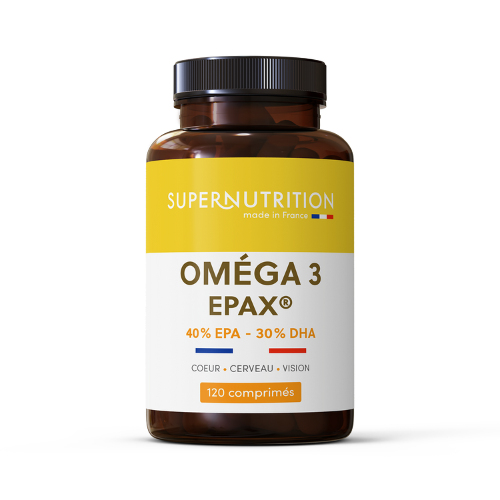
Our expert solution
If you're looking for an option validated by our experts, our Omega-3 EPAX® offers exceptional stability. It's an ideal solution for those who demand optimal concentration combined with certified sustainable fishing.
View our Omega 3How long do omega-3s take to work on hair?
The first visible effects on hair appear between 3 and 6 months of regular supplementation. This delay is explained by the biological cycle of hair, divided into three successive phases.
- Month 1: improved scalp hydration, reduced itching and dryness.
- Months 2-3: progressive reduction of hair loss, weakened follicles exit the telogen phase.
- Months 3-6: visible density gain, new hair in active growth phase, strengthened texture.
- Beyond 6 months: stabilization of benefits, long-term maintenance of hair health.
A shorter course does not give the hair cycle enough time to reflect nutritional intake. This is a physiological fact, not a matter of patience.
What dosage of omega-3s for hair health?
ANSES recommends a daily intake of 500 mg of EPA and DHA combined for the adult French population, including at least 250 mg of DHA. EFSA sets the minimum threshold at 250 mg per day. To support hair health, aiming for the higher range (500 to 1000 mg/day) remains consistent with available data.
EPA or DHA: which to prioritize for hair?
Both work synergistically. EPA provides the dominant anti-inflammatory effect, useful for the scalp. DHA supports the membrane structure of follicle cells. A good supplement offers both, with a balanced ratio.
What about ALA from vegetable oils (flax, rapeseed, walnut)?
Alpha-linolenic acid (ALA) found in flaxseed oil, rapeseed oil, and flax or walnut seeds is a plant-based omega-3. Its conversion rate to EPA and DHA by the body remains below 10% according to ANSES data. For a targeted action on hair health, marine sources (fish oil, liver oil) remain more direct.
How to choose a quality omega-3 supplement?
An effective omega-3 supplement meets four objective and measurable criteria. These criteria are found on the product label or technical sheet.
| Criterion | Quality threshold | Why it's important |
|---|---|---|
| Actual EPA + DHA dose | ≥ 500 mg per daily serving | Distinguish "fish oil" (crude) from "active omega-3s" (EPA+DHA) |
| TOTOX index | < 10 | Measures oil oxidation, freshness guarantee |
| Origin and certification | Sustainable fishing, traceability | Quality of raw material and environmental impact |
| Chemical form | Triglycerides (TG) preferred | Better bioavailability than ethyl ester form |
Our position at SuperNutrition: our Omega 3 EPAX® meets these 4 criteria, with Friend of the Sea certified oil and a TOTOX systematically below the critical threshold.
What are the dietary sources of omega-3s for hair?
Fatty fish provide EPA and DHA directly assimilated by the body. ANSES recommends two servings of fish per week, including one fatty fish. Plant sources provide ALA, to be included as a supplement.
| Food | Omega-3 content (EPA+DHA or ALA) per 100 g | Type |
|---|---|---|
| Mackerel | ~2,600 mg (EPA+DHA) | Marine |
| Sardine | ~2,000 mg (EPA+DHA) | Marine |
| Salmon | ~1,800 mg (EPA+DHA) | Marine |
| Herring | ~1,700 mg (EPA+DHA) | Marine |
| Flax seeds | ~22,800 mg (ALA) | Plant (conversion < 10%) |
| Walnuts | ~9,000 mg (ALA) | Plant (conversion < 10%) |
| Rapeseed oil | ~9,100 mg (ALA) | Plant (conversion < 10%) |
Source: CIQUAL 2024 table, ANSES. Small fatty fish (sardines, mackerel, anchovies) have a double advantage: rich in EPA+DHA and low accumulation of heavy metals due to their low position in the food chain.
Read also: The impact of omega-3s on the skin.
Frequently asked questions about omega-3s and hair
Can omega-3s and collagen be combined for hair?
Yes, the two work synergistically. Omega-3s nourish the follicle from within through their anti-inflammatory action. Collagen provides the structural amino acids of the hair fiber. This combination targets both the root and the shaft.
Are plant-based omega-3s (flax, chia) sufficient for hair?
They contribute, but their conversion rate to EPA and DHA is low in humans. For targeted hair action, concentrated marine sources remain more effective. The ideal is to combine both.
How many omega-3 capsules per day for hair?
The number depends on the product's concentration. The goal is to reach 500 to 1000 mg of EPA+DHA per day. Read the label: "1000 mg of fish oil" does not mean 1000 mg of active omega-3s.
Can omega-3s cause hair loss?
No, at recommended doses. An animal study from 2022 suggested a pro-inflammatory skin effect at very high doses in mice, but this result does not translate to standard human intakes (500 to 2000 mg/day).
Should I take a break from omega-3 supplementation?
No, omega-3s can be taken continuously, as they are not permanently stored by the body. Regular daily intake remains the most beneficial regimen.
What time of day should I take my omega-3s?
Preferably with a meal containing lipids. This improves the absorption of fatty acids and limits potential reflux.
Safety advice
Before starting any supplement, consult your doctor.
Scientific sources
- Le Floc'h C. et al., Effect of a nutritional supplement on hair loss in women, Journal of Cosmetic Dermatology, 2015. View study
- Sultana N. et al., Efficacy and Safety of Omega 3 Fatty Acid in the Treatment of Telogen Effluvium in Middle Aged Women, Medical Research Chronicles, 2023. View study
- Lin C. et al., Consumption of fish oil high-fat diet induces murine hair loss via epidermal fatty acid binding protein in skin macrophages, Cell Reports, December 2022. View study
- ANSES, Opinion on the updating of PNNS dietary guidelines – nutritional references for fatty acids, 2016-2024 (CIQUAL 2024 table). View opinion


