

By Sacha Cohadon, reviewed by our certified naturopath - Updated June 2, 2026
Choosing the best zinc for skin in 2026? Our comparison of the 5 top references by zinc form (bisglycinate, food supplement). Health benefits for sensitive skin, blemish-prone skin, and zinc for inflammatory acne.
The best zinc for skin in 2026 is our Supernutrition Zinc + Selenium: 100% pure bisglycinate dosed at 15 mg, combined with selenium for a dual action on skin health and antioxidant protection. €14.90 for a 3-month course.
What is the best zinc for skin in 2026?
Our top 5 best zinc for skin in 2026 combines bisglycinate food supplements (preventive long-term treatment) and a gluconate medication (active inflammatory acne). The ranking prioritizes the zinc + selenium synergy for overall skin health.
↔ Swipe to see details
| Rank | Product and Brand | Zinc form | Zn / day | Skin cofactors | Price |
|---|---|---|---|---|---|
| 1 |
Zinc + Selenium Supernutrition |
100% pure Bisglycinate | 15 mg | Selenium (antioxidant synergy) |
€14.90 90 capsules / 3 months |
| 2 |
Zinc Nutri&Co |
Bisglycinate + Liposomal | 10 mg | Selenium |
€12.90 60 capsules / 2 months |
| 3 |
Zinc Bisglycinate Nutripure |
Pure chelated Bisglycinate | 15 mg | None (single formula) |
€16.90 90 capsules / 3 months |
| 4 |
Zinc Bisglycinate Novoma |
Chelated Bisglycinate | 15 mg | Vitamin B6 |
€18.90 120 capsules / 4 months |
| 5 |
Effizinc 15 mg Expanscience |
Gluconate (medication) | 30 mg | None |
~€4.50 30 capsules |
1. Zinc + Selenium - SuperNutrition
Our number 1 choice for skin in 2026. The formula combines 15 mg of elemental zinc in 100% pure bisglycinate form with synergistic selenium. Zinc contributes to the maintenance of normal skin, the protection of cells against oxidative stress, and normal acid-base metabolism.
The addition of selenium is not insignificant. Selenium supports cell protection against oxidative stress through a mechanism complementary to zinc, via glutathione peroxidase enzymes. This dual action covers two distinct enzymatic pathways of cutaneous antioxidant defense, whereas most zinc food supplements only cover one pathway.
The 100% pure bisglycinate (without buffer oxide) guarantees excellent bioavailability and optimal digestive tolerance, a decisive advantage for inflammation-prone sensitive skin. Vegetable capsule, without controversial excipients, made in France. At €14.90 for a 3-month course (€0.17 per day), this is our best quality-purity-price ratio for skin health.
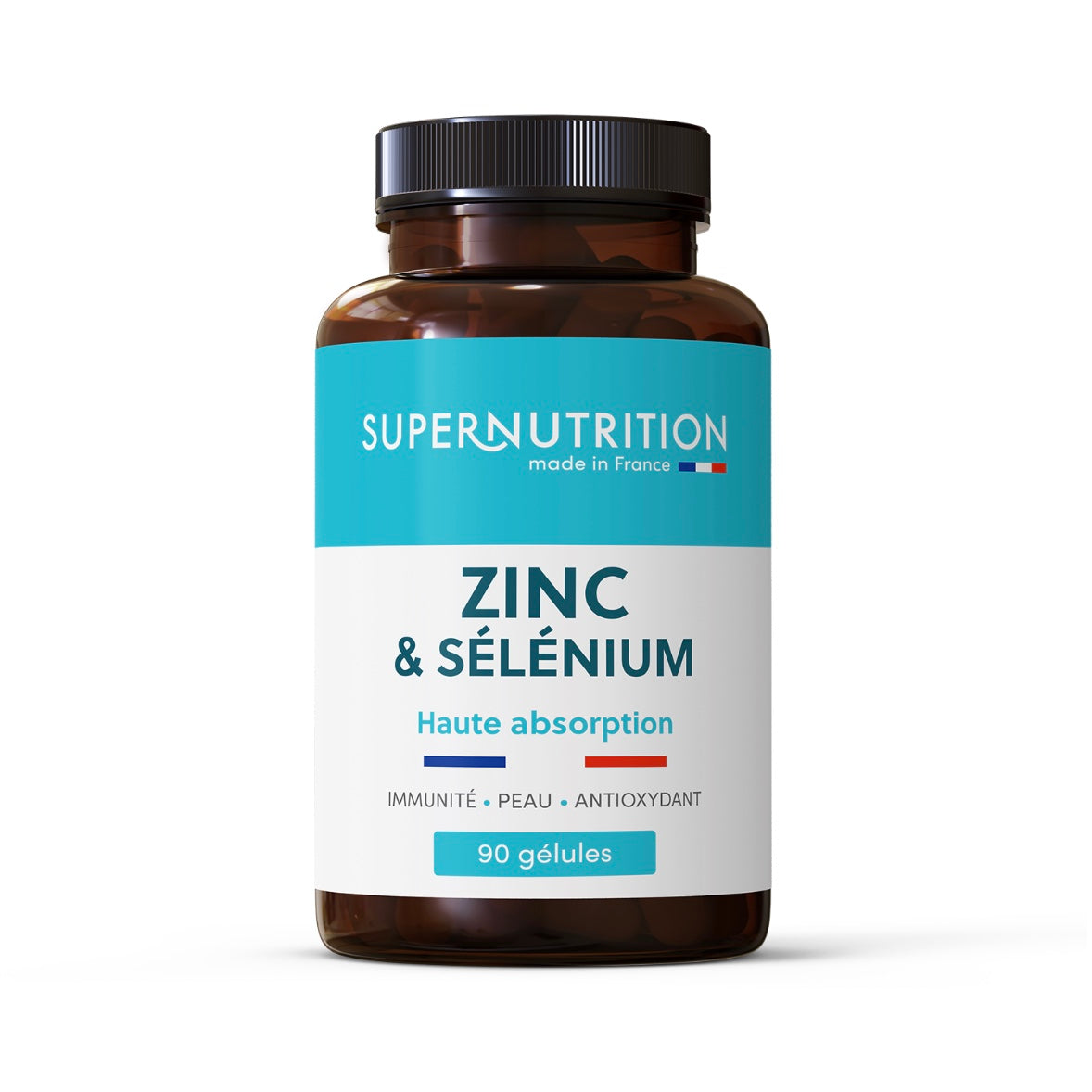
Our expert solution
Our Zinc + Selenium combines 100% pure bisglycinate and selenium in synergy to support your immunity, skin health, and cellular protection against oxidative stress. 90 capsules for a 3-month course.
View our Zinc + SeleniumFor whom? Individuals with blemish-prone skin, redness-prone skin, sensitive skin, and anyone looking for a comprehensive antioxidant + immunity boost.
2. Zinc bisglycinate - Nutri&Co
Nutri&Co offers a food supplement formula combining zinc bisglycinate and liposomal zinc, dosed at 10 mg of elemental zinc per day (100% of reference daily intake). The addition of selenium as a cofactor makes this product one of the rare competitors to offer the relevant zinc/selenium synergy for skin.
The dual bisglycinate + liposomal form aims to multiply absorption pathways. This is an interesting editorial choice, but it deviates from the strict "100% pure bisglycinate" positioning favored by our top 1. The 10 mg dose remains below the therapeutic threshold for a replenishment course in a deficient individual.
Suitable for skin types looking for a light maintenance food supplement with a selenium cofactor, without a full dose. €12.90 for 60 capsules (2 months), or €0.22 per day of treatment.
For whom? Individuals looking for a light maintenance formula with selenium combined with a moderate dose of zinc.
3. Zinc Bisglycinate - Nutripure
Nutripure focuses on simplicity: chelated zinc bisglycinate alone, dosed at 15 mg per capsule, without added cofactors. The brand remains one of the most transparent on the French market, with its public analysis certificates, detailed traceability, and identified founders (Christophe and Florent Carrio).
The formula is minimalist, without controversial excipients, made in France. The capsule is vegetable, gluten-free and lactose-free. Chelated bisglycinate ensures good bioavailability and correct digestive tolerance over a prolonged course.
For whom? Individuals who already take other cofactors separately (selenium, B6, vitamin C, collagen) and who want a pure zinc to integrate into their personal skin regimen. €16.90 for 90 capsules (3 months), or €0.19 per day of treatment, a notch above Supernutrition at an equivalent dose of zinc alone, but without the included selenium synergy.
4. Zinc Bisglycinate - Novoma
Novoma offers a classic chelated bisglycinate, dosed at 15 mg of elemental zinc per day, combined with vitamin B6 (2 mg per capsule). Vitamin B6 supports energy metabolism and nervous balance, two areas that indirectly contribute to skin comfort during stress.
The XL format of 120 capsules offers 4 months of complete treatment, making it the most economical option per month of treatment among premium bisglycinates. Vegetable capsule, suitable for vegetarian and vegan diets.
The difference from our top 1: no selenium in the formula. The antioxidant synergy of zinc/selenium relevant for the skin is therefore not covered. Vitamin B6 remains an interesting cofactor but less targeted for skin health. €18.90, or €0.16 per day of treatment.
For whom? Individuals building a personal stack who add their own selenium separately, and prefer an economical bisglycinate per month of treatment.
5. Effizinc 15 mg - Expanscience
Effizinc is a medication based on zinc gluconate, officially indicated for mild to moderate inflammatory acne. The initial dosage is 30 mg of zinc per day (2 capsules) for 3 months, on the advice of a pharmacist.
Why is it #5 in a general skin article? Effizinc is reserved for a specific use: active inflammatory acne. For general skin comfort, radiance, or antioxidant protection, its use is not indicated. If your need concerns inflammatory breakouts, consult our article dedicated to the best zinc for acne. For a long-term treatment of skin health, prioritize a bisglycinate food supplement.
For whom? Active inflammatory acne, on pharmacist's advice only. Not suitable for preventive skin comfort.
Why is zinc essential for your skin health?
Zinc supports skin health via three major biological mechanisms: maintaining the skin barrier, protecting against oxidative stress, and healing. These functions are recognized by official EFSA claims regarding zinc and normal skin.
Zinc supports the skin barrier
Zinc participates in the metabolism of keratinocytes, the main cells of the epidermis. Sufficient zinc bioavailability promotes cell renewal and the maintenance of an intact skin barrier. Zinc deficiency often results in drier, more sensitive skin that is more reactive to external aggressions.
Zinc promotes healing
Zinc is involved in collagen synthesis and fibroblast proliferation, two processes essential for skin repair. Zinc supplementation supports skin comfort after minor injuries (micro-cuts, irritation) or local treatments (aesthetic sessions, gentle peels).
Zinc protects against oxidative stress
Zinc is a cofactor of superoxide dismutase (SOD), a major antioxidant enzyme that neutralizes free radicals at the cellular level. This property protects the skin from premature skin aging linked to UV, pollution, and stress. This is one of the central arguments for using zinc in beauty treatments.
Which form of zinc to choose for sensitive skin?
Three forms of zinc are common in skin-oriented supplements: bisglycinate, gluconate, and oxide. The choice depends on your skin profile and the phase of treatment.

Bisglycinate for sensitive skin
Zinc bisglycinate is the preferred form for sensitive skin, prone to redness, inflammation, or digestive intolerances. Its chelated structure (zinc bound to two glycine molecules) facilitates intestinal absorption and improves digestive tolerance. No laxative effect, no gastric discomfort, even with prolonged use.
The bioavailability of bisglycinate is high, allowing a moderate daily dose (15 mg) without risk of overdose. Our Supernutrition Zinc + Selenium uses this 100% pure bisglycinate form, without buffer oxide, guaranteeing the best absorption.
Zinc gluconate for active acne
Zinc gluconate is the form used in Effizinc and Granions medications, officially indicated for inflammatory acne. Its therapeutic daily dose (30 mg) makes it a specific option for active acne breakouts, on pharmacist's advice. This form is less suitable for a long-term beauty treatment.
Why avoid zinc oxide in oral treatment
Zinc oxide has low oral bioavailability (about 4% absorption) and average digestive tolerance. It is poorly absorbed by the intestine and is not suitable for an effective oral treatment for the skin. Reserve zinc oxide for topical uses (mineral sunscreen, local healing care).
Why combine zinc and selenium for skin?
The combination of zinc and selenium activates two complementary antioxidant enzymatic pathways, whereas each mineral alone only covers one. This is the main scientific argument that justifies preferring a combined formula rather than zinc alone, for skin use.
Zinc is a cofactor of superoxide dismutase (SOD), an enzyme that neutralizes free radicals at the cellular level. Selenium is a cofactor of glutathione peroxidase (GPx) enzymes, which are involved in a distinct but complementary antioxidant pathway. These two pathways work in relay to neutralize different types of free radicals involved in skin aging.
For immunity too, the two minerals act in synergy. Zinc and selenium both contribute to the normal functioning of the immune system according to EFSA claims. This dual action supports the skin's defense against external aggressions (UV, pollution, environmental oxidative stress).
For blemish-prone skin, the zinc/selenium synergy offers another advantage: selenium supports thyroid function, a gland whose imbalances can affect the quality of the skin and hair. Our Supernutrition Zinc + Selenium provides this dual action in a single product, without having to stack two separate supplements.
Beauty stack: zinc, collagen, and hyaluronic acid, really effective?
The idea of a beauty stack combining zinc bisglycinate, marine collagen, and hyaluronic acid is biologically coherent. Each active ingredient covers a specific aspect of skin care, and their actions complement each other without redundancy.
Zinc supports the synthesis of endogenous collagen (your body produces its own collagen). Hydrolyzed marine collagen provides the precursor peptides necessary for this synthesis. Hyaluronic acid supports skin hydration by retaining water in the dermis. Together, these three active ingredients cover elasticity, hydration, and cellular regeneration.
In practice, the stack is built by combining three separate food supplements: a zinc bisglycinate (15 mg per day), a hydrolyzed marine collagen (5 to 10 g per day), and pure hyaluronic acid (100 to 200 mg per day). This modular approach allows you to calibrate each dose according to your profile and replace an active ingredient without changing your entire regimen.
For the zinc fraction specifically, our Supernutrition Zinc + Selenium already provides an internal antioxidant synergy thanks to selenium. You can supplement it with marine collagen and hyaluronic acid from another brand to build a complete skin stack at a controlled cost.
Which beauty stack for which skin profile?
| Skin profile | Recommended stack | Duration |
|---|---|---|
| Blemish-prone skin, redness-prone skin | Zinc + Selenium bisglycinate 15 mg/day | 3 months |
| Mature skin, signs of aging | Zinc + Selenium + Marine Collagen + Hyaluronic Acid | 3 to 6 months |
| Dull skin, lack of radiance | Zinc + Selenium + Vitamin C | 3 months |
| Sensitive, reactive skin | Pure Zinc Bisglycinate alone (no cofactors) | 3 months |
What dose and duration of treatment for skin health?
The recommended dose for a basic skin treatment is 15 mg of elemental zinc per day, in bisglycinate form, for a minimum of 3 months. This dosage corresponds to 150% of the reference daily intake and covers the needs of an adult who is not deficient.
For athletes, vegetarians, vegans, or individuals exposed to significant oxidative stress (urban pollution, regular UV exposure), the treatment can be extended to 4 or 6 months. Beyond that, a 4 to 8-week break is recommended to allow the body to regulate its own absorption mechanisms.
It should be taken with a meal, ideally in the morning or at midday. Avoid taking your zinc bisglycinate with a calcium or iron supplement within the same hour: these minerals compete for absorption in the intestine. For a complete beauty treatment, combine zinc with marine collagen (in the morning) and hyaluronic acid (at another time of the day).
4 Mistakes to Avoid When Taking a Zinc Supplement for Skin
A zinc treatment focused on skin can lose effectiveness if these four mistakes are made. Here's how to avoid them to optimize the benefits for your skin health.
- Taking zinc with a meal rich in whole grains or legumes. The phytates in these foods form complexes with zinc and reduce its absorption. Space out intake by 2 hours with these foods.
- Combining zinc with a calcium or iron supplement at the same time. These minerals compete with zinc for absorption. Space out intake by 2 to 3 hours to preserve bioavailability.
- Stopping the treatment before 3 months. The effects on the skin (radiance, skin comfort, skin texture quality) take time to appear. Premature cessation does not allow for a true assessment of the benefit to the skin condition.
- Preferring a very low dose of zinc, thinking it acts like a cosmetic. An oral dose of less than 10 mg per day only provides maintenance coverage of nutritional intake, without a noticeable treatment effect on the skin. For a targeted effect, aim for a minimum of 15 mg per day.
FAQ: Your Questions About the Best Zinc for Skin
What is the difference between zinc bisglycinate and zinc picolinate for skin?
Zinc bisglycinate and zinc picolinate are two highly bioavailable chelated forms, both well-tolerated digestively. Bisglycinate is more widely available in France, better documented as a dietary supplement, and preferred for sensitive skin due to its superior digestive tolerance. Picolinate remains a good alternative if you find a quality formula.
How long does it take to see the effect of zinc on my skin?
The first effects on skin comfort (texture, radiance) appear between 4 and 6 weeks of regular treatment. Sustainable improvement in skin condition is observed over a minimum of 3 months, the duration of a standard treatment at 15 mg per day. For individuals with persistent imperfections, extend the treatment up to 6 months.
Can zinc help mature skin?
Zinc supports cell protection against oxidative stress and participates in collagen synthesis. Both of these mechanisms are relevant for mature skin. For a more comprehensive anti-aging effect, the combination of zinc + marine collagen + hyaluronic acid forms a coherent beauty stack to integrate into your routine.
Can a zinc supplement and a zinc-based cosmetic be used together?
Yes, oral treatment and zinc-based cosmetic care act on two different levels (internal and external) and are not competing. Topical care targets a specific area (local pimple, irritation), while oral treatment supports the skin condition as a whole. Just make sure you don't exceed the recommended daily oral dose.
Is zinc suitable for sensitive skin?
Yes, provided you choose a 100% pure bisglycinate form, without controversial excipients (magnesium stearate, titanium dioxide). Bisglycinate is the best-tolerated form for individuals with reactive or intolerant skin. Avoid oxide and sulfate forms for prolonged oral treatment.
Should selenium be taken in addition to zinc for skin?
The combination of zinc and selenium activates two complementary antioxidant pathways, making it a coherent combo for the skin. Our Supernutrition Zinc + Selenium provides both minerals in the same capsule, simplifying daily intake. If you're taking zinc alone, supplement with separate selenium to benefit from the complete synergy.
What type of zinc should be chosen during pregnancy?
During pregnancy, any zinc supplementation must be approved by your doctor or midwife. Zinc needs increase during pregnancy and breastfeeding, but self-medication is not recommended. Opt for dietary supplements specifically formulated for pregnancy, with an adapted dosage.
Safety advice
Before starting any treatment, consult your doctor. Dietary supplements are not a substitute for a varied and balanced diet or a healthy lifestyle.
Scientific Sources
- EFSA, Nutrition and health claims (Regulation EC 1924/2006; list of authorized claims established by Regulation EU 432/2012). efsa.europa.eu
- ANSES, Nutritional reference values for vitamins and minerals (opinion referral 2017-SA-0141, 2019). anses.fr
- Dhaliwal S. et al., review of serum zinc levels in chronic and autoimmune skin diseases, 2020. PMC9724729
- Khan A. et al., “Zinc, copper, and selenium levels in vitiligo: a systematic review and meta-analysis,” Scientific Reports, 2024 (DOI 10.1038/s41598-024-61982-8). PMC11467178


