

By Sacha Cohadon, reviewed by our certified naturopath. Updated on June 5, 2026.
Best zinc for hair in 2026? Our comparison of 5 products: pure zinc bisglycinate or pharmacy biotin complexes. Hair benefits: zinc plays a key role in keratinization and maintaining the hair fiber.
Key takeaways
- Zinc contributes to the maintenance of normal hair and supports keratin synthesis (EFSA claims).
- Bisglycinate form offers the best bioavailability with excellent digestive tolerance.
- The zinc + selenium synergy supports the hair root and antioxidant protection of the hair follicle.
- Our 2026 top pick: Supernutrition Zinc + Selenium, at €0.17 per day for a 3-month course.
What is the best zinc for hair in 2026?
Our top 5 best zinc for hair in 2026 combines two product families. On one hand, zinc-only supplements or with targeted cofactors (Supernutrition, Nutrimuscle, Novoma) at full dose. On the other hand, pharmacy hair complexes (Forcapil, Luxéol) that combine zinc, biotin, sulfur amino acids, and B vitamins.
↔ Slide to see details
| Rank | Product and Brand | Zinc form | Zn / day | Hair cofactors | Price |
|---|---|---|---|---|---|
| 1 |
Zinc + Selenium Supernutrition |
100% pure bisglycinate | 15 mg | Selenium (keratinization, follicle) |
€14.90 90 capsules / 3 months |
| 2 |
Zinc Ultimine 5.5 Nutrimuscle |
Zinc yeast (koji fermentation) | 12 mg | None (natural form) |
€16.95 120 capsules / 4 months |
| 3 |
Zinc Bisglycinate Novoma |
Chelated bisglycinate | 15 mg | Vitamin B6 |
€18.90 120 capsules / 4 months |
| 4 |
Forcapil Hair and Nails Arkopharma |
Zinc oxide | ~5 mg | Cystine, methionine, biotin, B5, B6, B9, vitamin D3 |
~€25 60 capsules / 2 months |
| 5 |
Luxéol Laboratoire Mayoly |
Zinc bisglycinate | ~5 mg | Rocket, horsetail, biotin, selenium, copper, B8 |
~€20 60 capsules / 2 months |
1. Zinc + Selenium, Supernutrition
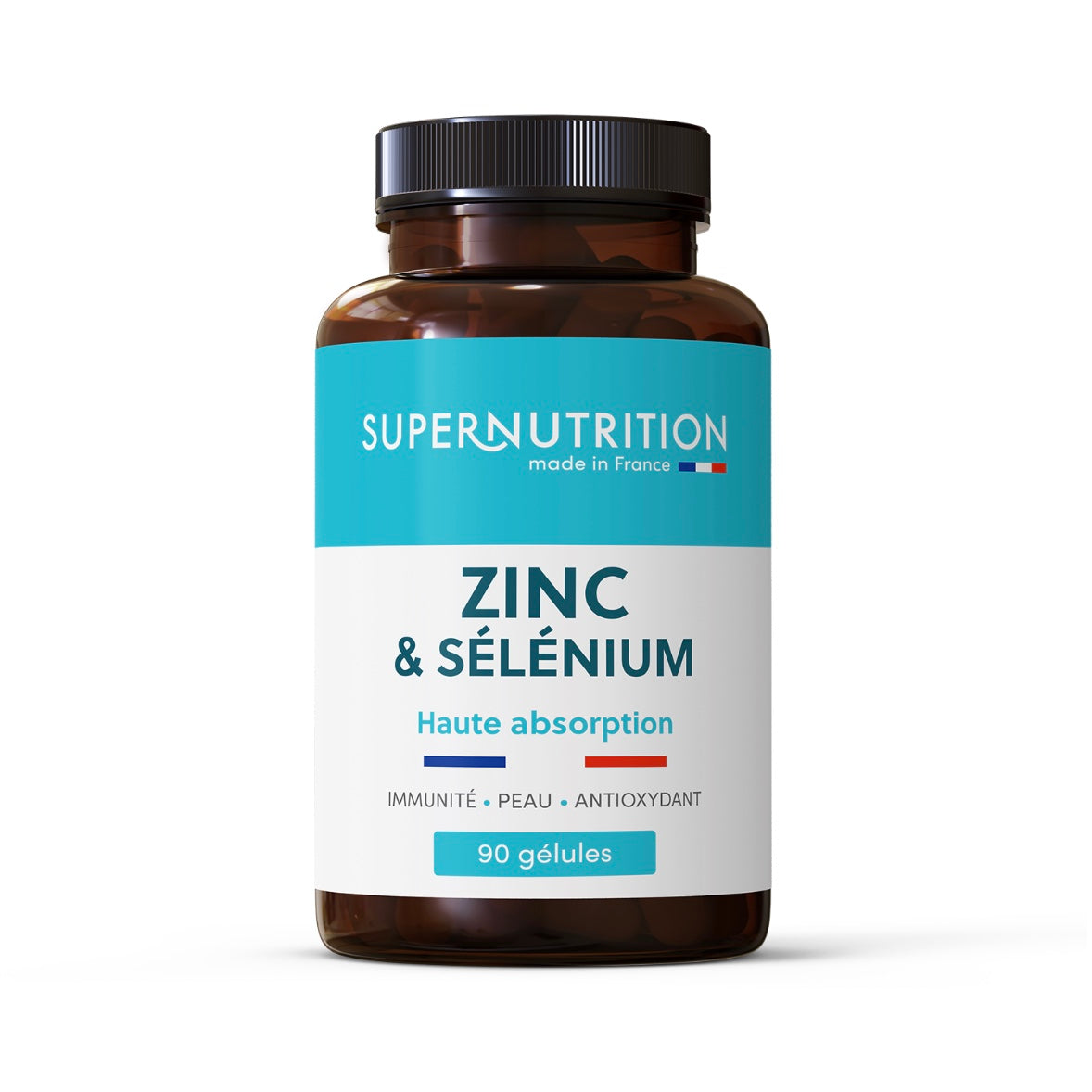
Our number 1 choice for your hair in 2026. The formula combines 15 mg of elemental zinc in 100% pure bisglycinate form with synergistic selenium. Zinc contributes to the maintenance of normal hair according to EFSA claims, as does selenium. This dual action supports both keratinization and protection of the hair follicle.
The 100% pure bisglycinate (without buffer oxide) guarantees high bioavailability and optimal digestive tolerance for a 3-month course. Vegetable capsule, without controversial excipients, made in France. No biotin in the formula, which allows those who already take it separately to calibrate their hair stack without duplication.
For whom? Profiles with seasonal hair loss, post-stress, post-pregnancy, or anyone wishing to strengthen hair fiber as a basic treatment. At €14.90 for a 3-month course (or €0.17 per day), it's our best value for purity and price on the hair axis.
Our expert solution
Our Zinc + Selenium combines 100% pure bisglycinate and synergistic selenium to support your immunity, skin health, and cellular protection against oxidative stress. 90 capsules for a 3-month course.
View our Zinc + Selenium2. Zinc Ultimine 5.5, Nutrimuscle
Nutrimuscle offers a different approach with zinc from koji yeast fermentation, dosed at 12 mg of elemental zinc per day. The yeast form provides 100% natural zinc, bound to proteins and amino acids, which may be suitable for those who prefer natural sources to synthetic chelated forms.
The 120-capsule format for a 4-month course makes it an economical product per month. The brand is known for its transparency and the quality of its raw materials (independent laboratory). No added cofactors, mono-active formula.
For whom? Athletes or nature enthusiasts looking for natural zinc without cofactors, to integrate into a personal stack with separate biotin. €16.95, or €0.14 per day of treatment.
3. Zinc Bisglycinate, Novoma
Novoma relies on a classic chelated bisglycinate, dosed at 15 mg of elemental zinc per capsule, combined with vitamin B6 (2 mg per capsule). Vitamin B6 supports energy metabolism and nervous balance, two axes that can indirectly contribute to hair health during periods of stress.
The XL format of 120 capsules offers a full 4-month course. Vegetable capsule, suitable for vegetarian and vegan diets. The difference with our top 1: no selenium in the formula, therefore no relevant antioxidant synergy on the hair follicle.
For whom? Personal stack profiles who want an economical bisglycinate per month of treatment, with a useful B6 cofactor during periods of stress. €18.90, or €0.16 per day of treatment.
4. Forcapil Hair and Nails, Arkopharma
Forcapil is one of the historical pharmacy references for hair and nails. The formula combines cystine, methionine (sulfur amino acids, keratin precursors), biotin (vitamin B8), vitamins B5, B6, B9, vitamin D3, and zinc in oxide form. A complex all-in-one approach.
The zinc dose remains moderate, around 5 mg per day, in oxide form, whose oral bioavailability is lower than bisglycinate. The formula focuses more on amino acids and biotin than on zinc itself. Bovine gelatin, presence of magnesium stearate.
For whom? Profiles with significant hair loss looking for an all-in-one hair approach with high-dose biotin. At ~€25 for 2 months (an intensive 3-month program is recommended), the total cost reaches ~€75, higher than a zinc bisglycinate plus separate biotin stack.
5. Luxéol
Luxéol takes a more natural approach, with plant extracts (rocket, horsetail) combined with zinc bisglycinate, selenium, copper, and biotin (vitamin B8). The simultaneous presence of zinc, selenium, and copper covers the three key minerals for hair according to EFSA claims.
The zinc dose remains around 5 mg per day, again lower than a dedicated zinc supplement. The brand focuses on growth and fortification, with a more pronounced cosmetic approach than Forcapil.
For whom? Natural profiles who prioritize plant extracts in addition to a moderate dose of zinc. ~€20 for 60 capsules (2 months), which is a monthly cost equivalent to Forcapil.
Why is zinc essential for hair health?
Zinc supports hair health through three major biological mechanisms: keratin synthesis, the hair cycle, and follicle protection against oxidative stress. These functions are recognized by official EFSA claims regarding zinc and the maintenance of normal hair.
Zinc supports keratin synthesis
Keratin is the main protein that makes up the hair fiber. Its synthesis at the hair follicle depends on several nutrients, including zinc. Sufficient zinc bioavailability promotes keratin production and the maintenance of a healthy and resistant hair fiber.
Zinc participates in the hair cycle
Hair follows a cycle of growth, rest, and shedding (anagen, catagen, telogen phases). Zinc is involved in regulating this cycle by supporting the proliferation of hair follicle cells during the anagen phase (active growth). A zinc deficiency can disrupt this cycle and promote premature hair loss.
Zinc protects the follicle from oxidative stress
Zinc is a cofactor of superoxide dismutase (SOD), a major antioxidant enzyme that neutralizes free radicals at the cellular level. This property protects the hair follicle from premature aging linked to environmental oxidative stress (UV, pollution, tobacco) and physiological stress (chronic stress).
Pharmacy biotin complex or pure zinc bisglycinate: which to choose?
The choice between a pharmacy complex like Forcapil or Luxéol and pure zinc bisglycinate depends on your hair profile and your treatment approach. The two options are not mutually exclusive: they correspond to two different logics, detailed below.
The all-in-one pharmacy complex
Hair complexes combine several active ingredients in a single capsule: zinc (at a moderate dose, around 5 mg), biotin (B8), sulfur amino acids (cystine, methionine), B vitamins, and sometimes copper and selenium. The advantage: a single daily intake, maximum simplicity, formulation designed for significant hair loss.
Main limitation: the zinc dose remains moderate, which is not suitable for zinc-deficient profiles seeking a true recovery treatment. Biotin is often at a high dose, which may be suitable for significant hair loss but may be superfluous for maintenance.
Pure zinc bisglycinate in a personal stack
Zinc bisglycinate alone (at a full dose of 15 mg) allows you to precisely calibrate your zinc intake, independently of other cofactors. You can then add separate biotin according to your needs (2.5 mg for maintenance, up to 5 or 10 mg for significant hair loss), copper if a deficiency is proven, or marine collagen for an overall beauty effect.
Advantage: better zinc dose, total control of your stack, often more economical per mg of active ingredient. Limitation: requires managing several daily doses and knowing how to build your stack according to your profile.
Our recommendation: for a basic treatment or preventive maintenance, pure zinc bisglycinate in a personal stack remains more effective per mg of zinc supplied. For significant hair loss requiring a comprehensive approach, the pharmacy complex can be a good starting point.
Why combine zinc and selenium for your hair?

The combination of zinc and selenium is rare but relevant for hair. Both minerals have EFSA claims for the maintenance of normal hair, and their action is part of two complementary mechanisms: keratinization for zinc and antioxidant protection for selenium.
In terms of antioxidant activity, zinc and selenium activate two distinct enzymatic pathways. Zinc is a cofactor of superoxide dismutase (SOD). Selenium is a cofactor of glutathione peroxidases. These two pathways neutralize different types of free radicals involved in the aging of the hair follicle.
Selenium also supports the normal functioning of the thyroid, a gland whose imbalances can affect hair quality (telogen effluvium, dullness, fragility). This double mineral and hormonal action explains why the zinc + selenium synergy is favored in micronutrition approaches for seasonal and post-stress hair loss.
Our Supernutrition Zinc + Selenium provides this synergy in a single capsule per day, without having to stack two separate supplements. This is the main argument that justifies our number 1 position in this hair article.
Hair stack: zinc, biotin, and copper, really effective?
The combination of zinc bisglycinate, biotin, and copper forms a coherent hair stack on a biological level. Each active ingredient acts on a specific axis of the hair cycle, and their actions complement each other without excessive redundancy.
Zinc supports keratin synthesis and antioxidant protection. Biotin (vitamin B8) is involved in the metabolism of sulfur amino acids, direct precursors of keratin. Copper contributes to normal hair pigmentation and participates in the formation of disulfide bonds that give hair fiber its strength.
Two practical options are available to you: either a complex pharmacy formula like Luxéol (which provides all three active ingredients but at moderate individual doses), or a separate stack that allows you to calibrate each dose (zinc bisglycinate 15 mg + biotin 2.5 to 5 mg + copper 1 mg).
For a limited budget, the separate stack is often more economical per mg of active ingredient. For simplicity, the complex pharmacy formula facilitates adherence over 3 months, the minimum recommended duration to observe an effect on hair growth and loss.
Which hair stack for which profile?
The right hair stack depends on your profile and the underlying cause of your hair problem. Here are our recommendations according to the 4 most frequent profiles.
| Hair profile | Recommended stack | Duration |
|---|---|---|
| Seasonal hair loss (autumn, spring) | Zinc + Selenium bisglycinate 15 mg per day | 2 to 3 months |
| Post-pregnancy, post-chronic stress hair loss | Zinc + Selenium + Magnesium Bisglycinate + separate biotin | 3 to 6 months |
| Significant hair loss, weakened roots | Pharmacy complex like Forcapil or Luxéol | 3 months minimum |
| Preventive maintenance, fine hair | Zinc + Selenium bisglycinate alone, as an occasional course | 2 months, twice a year |
How much zinc do your foods provide?
- Oysters (6 units): ~30 mg of zinc
- Beef (100 g): ~5 mg of zinc
- Pumpkin seeds (30 g): ~2.5 mg of zinc
- Cashew nuts (30 g): ~1.8 mg of zinc
- Cooked lentils (100 g): ~1.3 mg of zinc
A varied diet generally covers the reference daily intake (10 mg). A 15 mg zinc bisglycinate course supplements this intake for specific hair needs.
What dose and duration of treatment for your hair?
The recommended dose to support hair health is 15 mg of elemental zinc per day in bisglycinate form, for a minimum of 3 months. This dosage corresponds to 150% of the reference daily intake and covers the needs of an adult without a deficiency.
For cases of significant hair loss, post-pregnancy, or chronic stress, the treatment can be extended to 6 months, ideally alternating with a 4 to 8-week break to allow the body to regulate its own zinc absorption mechanisms.
It should be taken with a meal, ideally in the morning or at midday. Avoid taking it simultaneously with iron or calcium supplements, which compete for absorption in the intestines. Space these intakes by 2 to 3 hours to preserve zinc bioavailability.
The first effects on hair fiber quality (strength, shine) appear in 6 to 8 weeks. The effect on growth and hair loss is observed over a minimum of 3 months, as the complete hair cycle lasts approximately 90 days. A shorter treatment does not allow for evaluation of the real benefit.
4 mistakes to avoid with a zinc treatment for hair
A hair-focused zinc treatment can lose effectiveness if these four mistakes are made. Here's how to avoid them to optimize the benefits for your hair fiber.
- Stopping the treatment before 3 months. The complete hair cycle lasts approximately 90 days. Premature cessation does not allow for evaluation of a real effect on hair growth or hair loss.
- Taking zinc with a meal rich in whole grains or legumes. The phytates in these foods form complexes with zinc and reduce its absorption. Space the intake by 2 hours from these foods.
- Combining a dedicated zinc bisglycinate and a pharmacy complex at the same time. You risk exceeding the recommended daily dose. Choose one approach or the other, not both simultaneously.
- Maintaining a dose of 25 mg or more per day beyond 3 months without follow-up. Prolonged high-dose zinc supplementation can affect the body's copper status. Prioritize 15 mg per day for maintenance and professional follow-up for higher doses.
FAQ: your questions about the best zinc for hair
How long before I see an effect of zinc on my hair?
The first effects on fiber quality (strength, shine) appear in 6 to 8 weeks. The effect on growth and hair loss is observed over a minimum of 3 months, as the complete hair cycle lasts approximately 90 days. A treatment of less than 3 months does not allow for evaluation of a lasting effect.
Should I prioritize zinc or biotin for hair?
Zinc and biotin act on complementary mechanisms. Zinc supports keratinization and antioxidant protection of the follicle. Biotin is involved in the metabolism of sulfur amino acids, precursors of keratin. Combining both is more effective than a single active ingredient, especially for cases of significant hair loss.
Does zinc really make hair grow back?
Zinc does not make hair grow back in an area of definitive alopecia. However, it supports the normal hair cycle and can limit hair loss related to a deficiency or oxidative stress. For persistent hair loss or significant alopecia, consult a dermatologist who can evaluate the precise cause.
Can I combine a zinc treatment and a strengthening shampoo?
Yes, oral zinc treatment and topical hair care act on two different levels (internal and external) and are not competing. Oral treatment supports the hair's foundation from within, while shampoo protects the already visible fiber. The two approaches are complementary.
Is zinc for hair suitable during pregnancy?
During pregnancy, any zinc supplementation must be approved by your doctor or midwife. Zinc needs increase during pregnancy and breastfeeding, but self-medication is not recommended. Prioritize food supplements specifically formulated for pregnancy, with an adapted dosage.
What foods are rich in zinc for hair?
The most absorbable dietary sources of zinc are red meat, seafood (oysters in particular), eggs, pumpkin seeds, and cashew nuts. For vegetarian or vegan profiles, the phytates in whole grains hinder zinc absorption, which often justifies targeted supplementation.
What is the difference between zinc bisglycinate and zinc gluconate for hair?
Zinc bisglycinate offers the best bioavailability and digestive tolerance for prolonged hair treatment. Zinc gluconate, used in anti-acne medications (Effizinc, Granions), is still properly assimilated but its therapeutic dose (30 mg) makes it a targeted option for active acne rather than a preventive hair treatment.
Safety advice
Before starting any treatment, seek advice from your doctor. Food supplements are not a substitute for a varied and balanced diet or a healthy lifestyle. For any marked or persistent hair loss, consult a dermatologist.
Scientific sources
- EFSA, Consolidated list of authorized health claims for zinc and selenium (EU Regulation 432/2012, updated 2023). efsa.europa.eu
- ANSES, Nutritional reference values for vitamins and minerals (opinion 2017-SA-0141, 2019). anses.fr
- Chang H-C, Chang Y-S. Association between serum zinc levels and androgenetic alopecia: a systematic review and meta-analysis. J Cosmet Dermatol. 2022. pubmed.


