

By Sacha Cohadon, reviewed by our certified naturopath - Updated on May 29, 2026
Key takeaways
- Zinc acts on the inflammatory component of acne by regulating sebum and skin flora.
- Attack phase: zinc gluconate medication 30 mg per day for 3 months (Effizinc, Granions), on pharmacist's advice.
- Maintenance phase: zinc bisglycinate food supplement 15 mg per day, 3 to 6-month course.
- Our 2026 top picks: Effizinc for the attack phase, Supernutrition Zinc + Selenium for maintenance.
What is the best zinc for acne in 2026?
Our top 5 best zinc for acne in 2026 combines two product families: zinc gluconate medications for the attack phase, and bisglycinate food supplements for the maintenance and upkeep course.
↔ Swipe to see details
| Rank | Product and Brand | Status | Zinc form | Zn Dose / day | Estimated price |
|---|---|---|---|---|---|
| 1 |
Effizinc 15 mg Expanscience |
Medication | Zinc gluconate |
30 mg 2 capsules / day |
~€4.77 30 capsules |
| 2 |
Zinc + Selenium Supernutrition |
Food supplement | 100% pure bisglycinate |
15 mg + selenium |
€14.90 90 capsules / 3 months |
| 3 |
Granions de zinc 15 mg Granions |
Medication | Zinc gluconate (ampoules) |
15 mg |
~€14.90 60 capsules |
| 4 |
Zinc Nutri&Co |
Food supplement | Bisglycinate + Liposomal |
10 mg + selenium |
€12.90 60 capsules / 2 months |
| 5 |
Zinc Bisglycinate Novoma |
Food supplement | Chelated bisglycinate |
15 mg + vitamin B6 |
€18.90 120 capsules / 4 months |
1. Effizinc 15 mg - Expanscience
Effizinc is a zinc gluconate-based medication, marketed by Expanscience laboratories. Each capsule provides 15 mg of elemental zinc in gluconate form (104.55 mg of zinc gluconate).
Its official indication: mild to moderate inflammatory acne, and acrodermatitis enteropathica. The recommended dosage for the attack phase is 2 capsules per day (i.e., 30 mg of zinc) for 3 months, then 1 capsule per day for maintenance.
It should be taken on an empty stomach in the morning, with a large glass of water and in a seated position. At least 2 hours apart from meals rich in phytates (whole grains, legumes) which inhibit zinc absorption. Medication dispensed without prescription on pharmacist's advice.
For whom? Effizinc is suitable for active inflammatory acne with redness and numerous pimples. On pharmacist's advice.
2. Zinc + Selenium - SuperNutrition
Our Zinc + Selenium combines 15 mg of elemental zinc in 100% pure bisglycinate form with synergistic selenium. A formulation designed for the maintenance course after a medication attack phase, or for individuals with a mild acne tendency who prefer a food supplement at a moderate dose.
Zinc contributes to the maintenance of normal skin and the protection of cells from oxidative stress. Selenium supports the normal functioning of the immune system and cell protection. This dual action covers the two main axes of acne-prone skin: skin health and antioxidant balance.
Vegetable capsule, no controversial excipients, made in France. At €14.90 for a 3-month course (1 capsule per day, or €0.17 per day), it's our best value for money for a long-term course against skin imperfections.
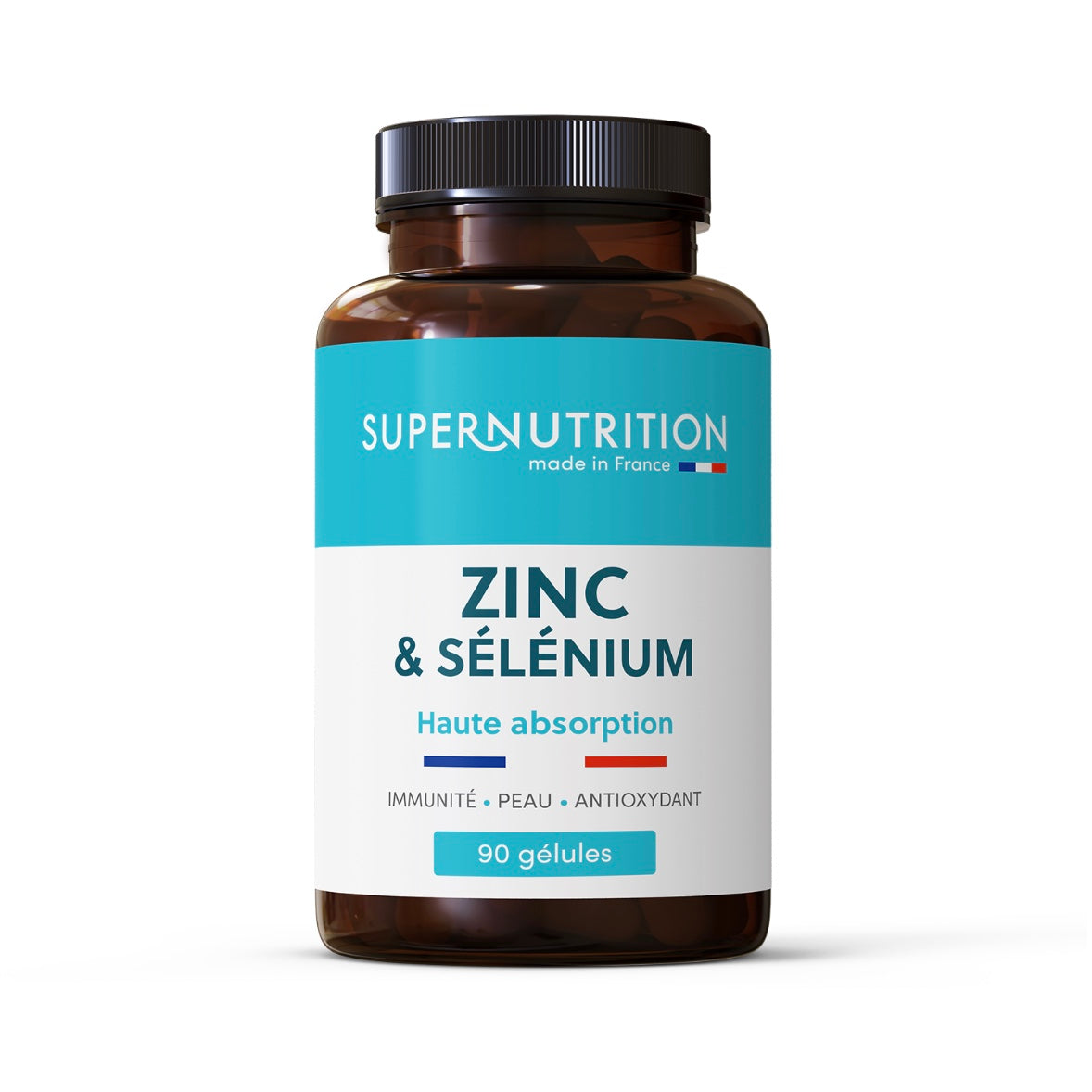
Our expert solution
Our Zinc + Selenium combines 100% pure bisglycinate and synergistic selenium to support your immunity, skin health, and cellular protection against oxidative stress. 90 capsules for a 3-month course.
View our Zinc + Selenium3. Granions de zinc 15 mg - Laboratoire Granions
Granions de zinc 15 mg is an oral solution medication, presented in 2 ml ampoules. Each ampoule provides 15 mg of elemental zinc in gluconate form. The composition remains minimalist: zinc gluconate, amylose, glycerol, glycine, purified water.
The official indication is identical to Effizinc: mild to moderate inflammatory acne, and acrodermatitis enteropathica. The dosage for the attack phase: 2 ampoules per day (30 mg of zinc) for 3 months, then 1 ampoule per day for maintenance.
The oral form may be suitable for people who do not like swallowing capsules. Its composition, free of gelatin and solid excipients, makes it an interesting alternative to Effizinc, with equivalent efficacy on the inflammatory component of acne.
4. Zinc - Nutri&Co
Nutri&Co offers a food supplement formula dosed at 10 mg of elemental zinc per day, which is 100% of the reference daily intake. A maintenance dose that covers daily needs without reaching the therapeutic dosage of gluconate medications (30 mg).
The form combines zinc bisglycinate and liposomal zinc - an editorial choice to multiply absorption pathways. Selenium added as a cofactor. This formula may be suitable for individuals with a mild acne tendency who are looking for a gentle maintenance supplement, without the need for a medication attack phase.
The point to note: at 10 mg per day, the dose remains below the threshold for a replenishment course for a deficient profile. For active inflammatory acne, it will be necessary to consider either gluconate medication for the attack phase, or a bisglycinate dosed at 15 mg for maintenance. €12.90 for 60 capsules (2 months), or €0.22 per day of treatment.
5. Zinc Bisglycinate - Novoma
Novoma offers a zinc bisglycinate formula dosed at 15 mg per capsule, combined with vitamin B6 (2 mg per capsule). Vitamin B6 supports energy metabolism and nervous balance, two areas that can indirectly contribute to skin comfort during periods of stress.
The XL format of 120 capsules offers a full 4-month course, making it the most economical monthly option among premium bisglycinates. Vegetable capsule, suitable for vegetarian and vegan diets.
The difference with our top 2: no selenium in the formula. The relevant zinc/selenium synergy for skin health is therefore not covered. €18.90, or €0.16 per day of treatment.
Why does zinc act on inflammatory acne?

Zinc acts on three key mechanisms involved in the formation of pimples: sebum production, inflammatory reaction, and the balance of skin flora. These three documented areas explain why zinc has remained a dermatological reference for 30 years in the management of mild to moderate inflammatory acne.
Zinc regulates sebum production
Zinc is involved in the metabolism of androgens at the sebaceous glands. Excessive sebum production promotes pore obstruction and the formation of comedones. Hormonal regulation via zinc helps limit this excess, which is the main trigger for acne flare-ups.
Zinc supports an anti-inflammatory action
Zinc modulates the inflammatory response at the skin level. It is precisely this action on the inflammatory component that justifies the official indication of zinc gluconate medications (Effizinc, Granions) in mild to moderate inflammatory acne. The redness and sensitivity associated with pimples are thereby reduced.
Zinc promotes the balance of skin flora
The skin harbors its own microbiota, whose balance conditions skin health. Zinc has documented purifying properties that contribute to the maintenance of normal skin, an officially authorized EFSA claim. This action complements the effects on sebum and inflammation.
Which form of zinc to choose for acne?
Three forms of zinc are commonly used in the treatment of acne: gluconate (medication form), bisglycinate (premium food supplement form) and oxide (form to avoid orally). The choice depends on severity, treatment phase, and user profile.
Zinc gluconate, reference medication form
Zinc gluconate is the form used in Effizinc and Granions medications. Its bioavailability is good and its medication status allows for a high daily dose (30 mg) with a precise framework for use. Recognized for over 30 years for its action on the inflammatory component of acne.
Limitations: absorption can be reduced by meals and certain medications (cycline and fluoroquinolone antibiotics). Taking it on an empty stomach in a seated position is mandatory to limit digestive problems.
Zinc bisglycinate, premium food supplement form
Bisglycinate combines zinc with two glycine molecules, an amino acid. This chelation increases the mineral's bioavailability, improves digestive tolerance, and allows it to be taken with a meal without loss of effectiveness.
Bisglycinate is the preferred form for long-term and maintenance courses as a food supplement. At 15 mg per day, it covers 150% of the reference daily intake and supports skin health in the long term.
Why avoid zinc oxide orally
Zinc oxide has a low oral bioavailability (approximately 4%) and average digestive tolerance. It is poorly absorbed by the intestine and is not suitable for an effective oral treatment for acne. Reserve zinc oxide for topical uses (cream, mask, local treatment).
Medication or food supplement: which to choose for acne?
The choice between gluconate medication (Effizinc, Granions) and bisglycinate food supplement (Supernutrition, Nutri&Co, Novoma) depends on the stage of acne management. The two families are not opposed: they follow one another in the attack phase and then in the maintenance phase.
The attack phase with gluconate medication
For established inflammatory acne with active breakouts, the attack phase relies on zinc gluconate medication at 30 mg per day for 3 months. The high dosage and medication status make it the reference when pimples are numerous or inflammatory.
The pharmacist or doctor are your contacts to start this phase, check for drug interactions, and adjust the duration. No food supplement can legally replace a medication in this phase.
The maintenance phase with bisglycinate food supplement
After the 3-month attack phase, the medication is reduced to 1 capsule per day (15 mg) for maintenance. At this stage, the 15 mg per day bisglycinate food supplement becomes a perfectly suitable alternative for a prolonged long-term course, without digestive discomfort and at a more accessible cost.
Our Supernutrition Zinc + Selenium is designed for this maintenance phase: 15 mg of elemental zinc in pure bisglycinate form, combined with selenium for immune and antioxidant synergy. At €14.90 for a 3-month course, the cost of a bisglycinate maintenance is very affordable.
How does the gut-skin axis influence your acne?
The gut-skin axis refers to the biological dialogue between your gut microbiota and the state of your skin. An imbalance in the gut microbiota (dysbiosis) maintains low-grade systemic inflammation that can manifest on the skin as acne breakouts, eczema, or redness.
Intestinal probiotics support the balance of the gut flora and indirectly contribute to skin balance. For chronic acne profiles, combining zinc bisglycinate (direct action) and intestinal probiotics (action on the gut-skin axis) constitutes a documented holistic approach.
Zinc itself is involved in the integrity of the intestinal barrier and the modulation of digestive immunity. The synergy between zinc supplementation and gut microbiota care explains why some practitioners combine these two approaches in the management of persistent acne.
What dosage and duration of treatment for acne?
Two distinct dosing regimens apply depending on the form of zinc chosen: gluconate medication or bisglycinate food supplement. The total duration of a complete treatment ranges from 6 to 9 months.
The attack phase under medication treatment
For Effizinc and Granions de zinc, the attack dose is 30 mg of zinc per day (2 capsules or 2 ampoules), to be taken once in the morning on an empty stomach, with a large glass of water and in a seated position. This dosage is maintained for 3 months.
After these 3 months, the dose is reduced to 1 capsule or 1 ampoule per day (15 mg) for maintenance. This maintenance phase can last several months depending on clinical evolution, in agreement with your pharmacist or doctor.
The maintenance phase with food supplements
For Supernutrition Zinc + Selenium and other bisglycinate supplements, the recommended dose is 15 mg of elemental zinc per day, to be taken with a meal. The full course lasts 3 months (90 capsules) and can be repeated 2 to 3 times a year, ideally at seasonal changes.
For individuals with mild acne who do not wish to use medication, this regimen of 15 mg per day for 3 to 6 months is sufficient to support skin health as part of an appropriate lifestyle (balanced diet, stress management, gentle skin cleansing).
4 common mistakes to avoid with an anti-acne zinc treatment
A zinc treatment for acne can lose effectiveness if these four mistakes are made. Here's how to avoid them.
- Taking zinc with meals rich in whole grains or legumes. The phytates contained in these foods bind zinc and reduce its intestinal absorption. Space the intake by 2 hours from these foods.
- Combining a zinc treatment with an iron or calcium supplement at the same time. These minerals compete with zinc for absorption. Space the intake by 2 to 3 hours.
- Stopping the treatment as soon as visible improvement in pimples occurs. The effect builds over a minimum of 3 months. Premature cessation encourages the recurrence of acne breakouts.
- Maintaining a dose of 25 to 30 mg per day beyond 3 months without follow-up. Prolonged supplementation at a high dose can affect the body's copper status. Opt for 15 mg per day as a relay after the initial phase.
FAQ: Your questions about the best zinc for acne
What is the difference between Effizinc and Granions de zinc?
Effizinc and Granions de zinc are two medications based on 15 mg zinc gluconate, with identical dosage and indication. Effizinc is marketed by Expanscience in capsule form, and Granions in oral ampoules. The choice is primarily a matter of format preference (capsule vs. liquid). They have equivalent efficacy on the inflammatory component of acne.
How long does it take to see an effect of zinc on pimples?
The first effects on inflammatory pimples usually appear between 4 and 8 weeks of regular treatment. Visible improvement in skin condition takes a minimum of 3 months, which corresponds to the official initial phase of zinc gluconate medications.
Can zinc worsen acne at the beginning of the treatment?
A slight temporary flare-up (a "purging" effect) may occur in the first 2 weeks in some individuals. This effect is limited and quickly disappears. If a significant worsening persists beyond 3 weeks, stop the treatment and consult your doctor or dermatologist.
Can zinc be combined with antibiotics for acne?
Zinc interacts with certain families of antibiotics used for acne, particularly cyclines (doxycycline, lymecycline) and fluoroquinolones. Space the intake of zinc by at least 2 to 3 hours from the antibiotic. Always ask your doctor for advice before any combination.
Is zinc suitable for hormonal acne?
Hormonal acne (premenstrual breakouts, polycystic ovary syndrome, post-contraceptive cessation) can benefit from zinc supplementation due to its action on sebum production and inflammation. Zinc remains a supplement to be integrated into a comprehensive management plan, in agreement with a healthcare professional.
At what age can zinc be taken for acne?
Effizinc and Granions de zinc are indicated from 12 years of age for mild to moderate inflammatory acne. For bisglycinate food supplements, use is reserved for adults (from 18 years of age) unless advised otherwise by a professional. For children and adolescents, pediatric or dermatological advice is recommended.
Which zinc to choose during pregnancy?
During pregnancy, any zinc supplementation must be validated by your doctor or midwife. Zinc requirements increase during pregnancy, but self-medication is not recommended. The acne indication for zinc gluconate medications during pregnancy requires specific medical advice.
Safety advice
Before starting any treatment, consult your doctor. Food supplements are not a substitute for a varied and balanced diet or a healthy lifestyle. Zinc gluconate medications should be taken on the advice of a pharmacist.
Scientific sources
- HAS - Transparency Committee - Opinion on Effizinc 15 mg, capsule, April 29, 2009. has-sante.fr
- Public Medicines Database - SPC Granions de zinc 15 mg/2 ml oral solution, updated 2024. base-donnees-publique.medicaments.gouv.fr
- EFSA - Consolidated list of authorized health claims for zinc and selenium (EU Regulation 432/2012, updated 2023). efsa.europa.eu
- “Serum zinc levels and efficacy of zinc treatment in acne vulgaris: A systematic review and meta-analysis”, Dermatology and Therapy, 2020.


