

In a nutshell: Zinc begins to act on the skin around the 4th week, but the net effect is seen between 8 and 12 weeks: allow a 3-month course of treatment to properly evaluate the result.
Zinc's effect on skin: how long does it take?
Expect 4 weeks for the first signs and 8 to 12 weeks for visible improvement. Skin renews itself on a cycle of approximately 28 days: a supplement does not shorten this biological timeframe.
The first perceived effects are a more even complexion and a less oily skin appearance. These generally appear from the 4th week of treatment.
A visible reduction in inflammatory imperfections occurs later, between 8 and 12 weeks. This timeline is observed in reference clinical trials on zinc and skin.
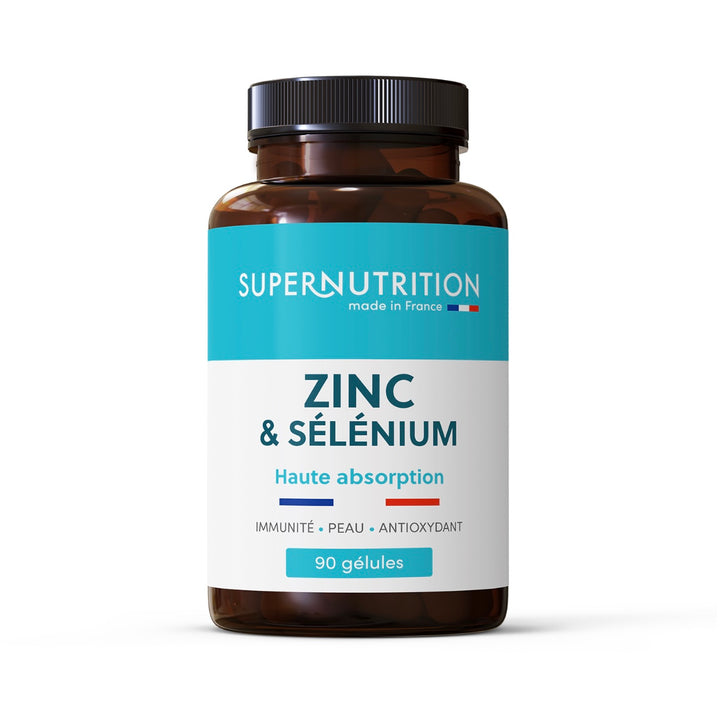
Our expert solution
Our Zinc + Selenium combines 100% pure bisglycinate and selenium in synergy to support your immunity, skin health, and cellular protection against oxidative stress. 90 capsules for a 3-month course of treatment.
View our Zinc + SeleniumTo properly evaluate the effect, a 3-month course of treatment is the minimum. Stopping before this period does not allow for judging the result.
| Treatment duration | Observed effect on skin |
|---|---|
| Weeks 1 to 3 | No visible change (saturation phase) |
| Week 4 | First signs: clearer complexion, less oily appearance |
| Weeks 8 to 12 | Visible improvement of inflammatory imperfections |
| 3 months and + | Reference duration to judge the real effect |
Why does zinc take several weeks to act on the skin?

Zinc acts on the underlying issues, not just on the surface. It supports skin cell renewal, a process that follows its own rhythm and is not accelerated by supplementation.
Zinc participates in protein synthesis and cell division, two key functions of skin repair. This underlying effect explains the delay between the start of treatment and the visible result.
It also plays a role in protecting cells against oxidative stress, a mechanism involved in skin aging. This action is gradual and long-term.
Our key information: the skin has its own clock. A renewal cycle lasts approximately 28 days, which sets an incompressible minimum before any observable result. Asking for an effect in a few days is like asking the skin to renew itself twice as fast as its biology allows.
Zinc is particularly beneficial for oily skin or skin prone to mild to moderate imperfections. In severe cases, it is not sufficient on its own, and medical advice is necessary.
Key takeaway: In clinical protocols for zinc, the most conclusive results on inflammatory lesions are measured around day 90, or 3 months of treatment.
What dose of zinc and what duration of treatment for the skin?
The usual range is between 15 and 30 mg of zinc per day, for a minimum of 3 months. In France, the recommended safety limit for an adult is 15 mg per day from all sources combined, unless otherwise advised by a professional.
Duration takes precedence over dosage. A short, high-dose course of treatment does not provide more benefit than a regular course of treatment carried out for the duration necessary for skin renewal.
The chemical form changes the amount actually absorbed, which is called bioavailability. Zinc bisglycinate, bound to glycine, is one of the well-assimilated and well-tolerated forms from a digestive perspective.
Some practical guidelines for your treatment:
- Take zinc away from meals rich in iron or calcium, which reduce its absorption.
- Space the intake of zinc and another supplement or medication by at least 2 hours.
- Maintain the treatment for 3 months before judging the result on your skin.
- Take a break between two treatments rather than continuous intake all year round.
What does science say about zinc's effect on skin?
Zinc contributes to the maintenance of normal skin, an officially recognized claim by EFSA. It also contributes to the protection of cells against oxidative stress and the normal functioning of the immune system.
Regarding imperfections, several recent studies observe an improvement in skin with mild to moderate acne tendencies after 8 to 12 weeks of supplementation, with a decrease in the number of inflammatory lesions.
Research on nutritional status also points to lower zinc intake in some people concerned by imperfections, which makes supplementation relevant, especially in cases of insufficient intake.
Zinc is therefore not a fad: its cutaneous roles are based on clinical data and a clear European regulatory framework. It supports a healthy lifestyle, without replacing it.
Frequently asked questions about zinc and skin
Can zinc act on skin in one week?
No. The skin renewal cycle lasts approximately 28 days. One week is not enough to observe an effect; the first signs appear around the 4th week.
How long does a course of zinc treatment for skin last?
The reference duration is 3 months. This is the time needed to measure a net effect and judge whether the treatment is right for you.
What is the best form of zinc for skin?
Chelated forms like bisglycinate are well-assimilated and well-tolerated. The form is as important as the dose for the amount actually absorbed.
Can you take zinc all year round for skin?
Continuous intake is not recommended without monitoring. Prefer 3-month courses of treatment with breaks, respecting the recommended daily dose.
Is zinc sufficient for severe imperfections?
No. For severe or cystic forms, zinc alone is rarely sufficient. Medical or dermatological advice is still necessary.
Do zinc and selenium complement each other for skin?
Yes. Both contribute to the protection of cells against oxidative stress, which makes them a coherent association in a skin treatment.
At what time of day should you take your zinc?
Preferably away from meals rich in iron or calcium, and at least 2 hours apart from other supplements, to optimize absorption.
Safety advice
Before starting any treatment, consult your doctor.
Sources
- Kazeminejad A. et al., « Serum zinc, selenium, and vitamin D levels in patients with acne vulgaris: A case–control study », Journal of Cosmetic Dermatology, 2024. https://www.ncbi.nlm.nih.gov/pmc/articles/PMC11626374/
- Le Floch C. et al., « Assessment of the benefit of a deep cleansing gel containing salicylic acid 2%, zinc gluconate 0.2% and lipohydroxy acids », Clinical, Cosmetic and Investigational Dermatology, 2023.
- EFSA / European Commission, Regulation (EU) 432/2012 — Register of authorized health claims (zinc: maintenance of normal skin, protection against oxidative stress). https://ec.europa.eu/food/safety/labelling_nutrition/claims/register/public/
- Assurance Maladie (ameli.fr), « Acné : consultation et traitement », updated 2026 (oral zinc, minimum 3-month course). https://www.ameli.fr/assure/sante/themes/acne/traitement


