

By Sacha Cohadon, reviewed by our certified naturopath - Updated May 26, 2026
Choosing the best zinc supplement for 2026? We compared 5 bisglycinate zinc products based on their bioavailability, forms of zinc, and dosage. Our top pick for a course of treatment: Supernutrition Zinc + Selenium, the most absorbable zinc on the market.
Key takeaways
- Bisglycinate offers the best bioavailability among the forms of zinc available in supplements.
- Recommended dose for a course of treatment: 15 mg of elemental zinc per day, up to 25 mg during an initial phase.
- The zinc + selenium synergy supports the immune system and protects cells against oxidative stress.
- Our top pick for 2026: Supernutrition Zinc + Selenium, at €0.17/day for a 3-month course.
What is the best bisglycinate zinc in 2026?
Our top 5 best bisglycinate zinc for 2026 was built on six concrete criteria: exact form of zinc, elemental zinc dose per day, presence of synergistic cofactors, excipients, manufacturing, and cost per day of treatment.
↔ Swipe to see details
| Rank | Product and Brand | Form | Elemental Zn / day | Cofactors | Price |
|---|---|---|---|---|---|
| 1 |
Zinc + Selenium Supernutrition |
100% pure Bisglycinate | 15 mg | Selenium (immunity and antioxidant synergy) |
€14.90 90 capsules / 3 months |
| 2 |
Zinc Nutri&Co |
Bisglycinate + Liposomal (hybrid formula) |
10 mg | Selenium |
€12.90 60 capsules / 2 months |
| 3 |
Zinc Bisglycinate Novoma |
Chelated Bisglycinate | 15 mg | Vitamin B6 |
€18.90 120 capsules / 4 months |
| 4 |
Zinc Bisglycinate Nutripure |
Chelated Bisglycinate | 15 mg | None (single-ingredient formula) |
€16.90 90 capsules / 3 months |
| 5 |
Zinc Bisglycinate Terravita |
Chelated Bisglycinate | 10 mg | None (single-ingredient formula) |
€12.90 120 capsules / 4 months |
1. Zinc + Selenium - SuperNutrition
Our number 1 choice for 2026. The supplement combines 15 mg of 100% pure bisglycinate zinc with synergistic selenium, a rare combination on the French market.
Both zinc and selenium contribute to the normal functioning of the immune system and the protection of cells against oxidative stress. Zinc also supports the maintenance of normal skin, hair, and nails.
The 90-capsule format, with one capsule per day, ensures a complete 3-month course. Minimalist formula, no controversial excipients, vegetable capsule, made in France. At €14.90 for a 3-month course (or €0.17/day), it's our best value for money in the comparison.
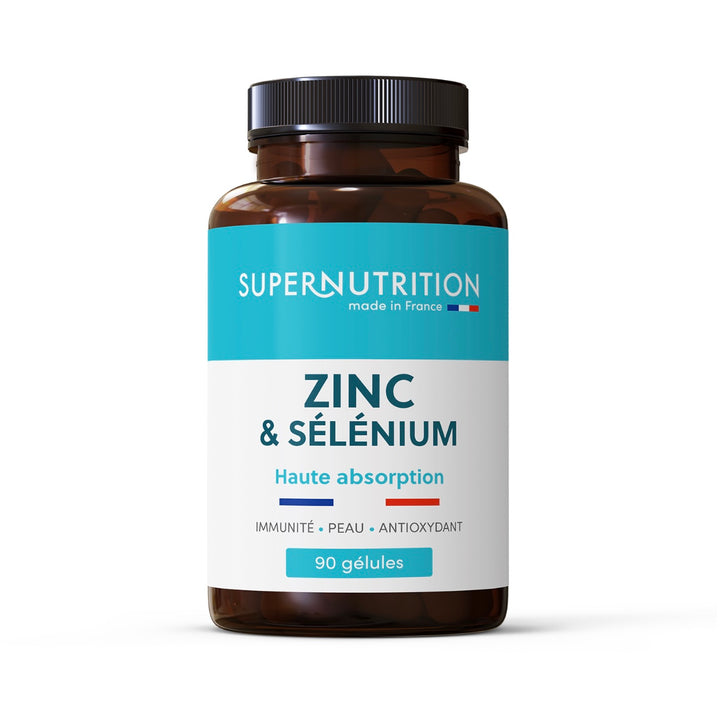
Our expert solution
Our Zinc + Selenium combines 100% pure bisglycinate and selenium in synergy to support your immunity, skin health, and cell protection against oxidative stress. 90 capsules for a 3-month course.
View our Zinc + Selenium2. Zinc Bisglycinate - Nutri&Co
Nutri&Co offers a formula focused on zinc-selenium synergy, with a daily dose of 10 mg of zinc combined with selenium. This approach clearly positions the product for "overall balance" rather than a high-dose strategy.
Zinc is supplied in two complementary forms: chelated bisglycinate and liposomal zinc. This technical choice aims to diversify intestinal absorption pathways. However, it moves away from a strictly "pure bisglycinate" positioning, which would focus on a single, highly standardized form.
The presence of selenium reinforces the logic of antioxidant synergy, particularly for skin, immunity, and oxidative stress, making it a direct competitor to Supernutrition on this functional aspect.
The 10 mg zinc dosage remains moderate (approximately 100% of NRVs), making it more suitable for maintenance use than for a corrective deficiency phase. The product is offered at €12.90 for 60 capsules, or approximately €0.22 per day of treatment.
3. Zinc Bisglycinate - Novoma
Novoma offers a classic chelated bisglycinate, dosed at 15 mg of elemental zinc per capsule, combined with vitamin B6, a cofactor that supports energy metabolism and nervous balance alongside zinc's action.
The XL format of 120 capsules (a 4-month course at one capsule per day) makes it the most economical option per month of treatment among the premium bisglycinates in the comparison. Vegetable capsule, suitable for vegetarian and vegan diets.
The main difference from our top pick: no selenium in the formula, so no immunity-antioxidant synergy that characterizes the zinc-selenium pairing in micronutrition. €18.90, or €0.16/day of treatment.
4. Zinc Bisglycinate - Nutripure
Nutripure focuses on simplicity: chelated zinc bisglycinate alone, dosed at 15 mg per capsule, without added cofactors. The brand remains one of the most transparent on the French market with its public analysis certificates and detailed traceability.
The capsule is vegetable, the formula is free of controversial excipients, and it is made in France. Suitable for individuals who already take other cofactors (multivitamins, separate selenium, B6) and want a "clean" zinc to integrate into a personal stack.
€16.90 for 90 capsules (3 months of treatment), or €0.19/day, a step above Supernutrition with an equivalent zinc composition, but without the included selenium synergy.
5. Zinc Bisglycinate - Terravita
Terravita offers the most economical supplement in the comparison: €12.90 for 120 capsules (4 months of treatment), or €0.11/day. The form remains correct (chelated bisglycinate), but the daily dose is divided by 1.5 compared to the other references.
10 mg of elemental zinc per capsule corresponds to only 100% of the reference daily intake. Suitable for light maintenance or as a supplemental intake for a non-deficient person, but insufficient for a recovery phase in a deficient individual.
No cofactors in the formula, no particular technical signature. A well-constructed entry-level product for tight budgets.
Read also: Discover our comparison of the best magnesium bisglycinate in 2026 to complete your essential mineral regimen.
Why is bisglycinate the best absorbable form of zinc?

Bisglycinate is the form of zinc with the highest bioavailability available in dietary supplements. Its chelated structure, where the mineral is bound to two glycine molecules (an amino acid), facilitates its passage through the intestinal wall and its absorption by the body.
Bisglycinate, gluconate, citrate, picolinate: what are the differences?
The forms of zinc available in supplements fall into two families: inorganic forms (zinc oxide, sulfate, carbonate) and organic chelated forms (zinc bisglycinate, citrate, gluconate, picolinate).
Inorganic forms like zinc oxide have low bioavailability and can cause digestive issues. Chelated forms offer better absorption.
Among the chelated forms, bisglycinate shows the highest absorption and best-documented digestive tolerance. Zinc picolinate also shows good absorption but is less available on the French market.
The effect of chelation on bioavailability
Bisglycinate chelation protects zinc from interactions with other minerals (iron, calcium, copper) in the intestine. This protection increases the fraction of zinc effectively absorbed and used by cells.
Glycine, the chelating amino acid, plays a dual role: it facilitates assimilation and softens the effect of zinc on the intestinal mucosa. The result is better absorption without digestive discomfort, even with prolonged use.
What dose of zinc should be taken per day?
Recommended daily zinc intake is between 9.4 and 14 mg per day for adults according to ANSES, with increased needs for pregnant and breastfeeding women, athletes, and elderly people.
Reference daily intake vs. treatment doses
On supplement labels, you'll see "% of Reference Daily Intake (RDI)" for zinc. The European RDI is set at 10 mg: this is the maintenance dose recommended for the general population.
For treatment, the dose increases to 15 mg per day (150% of RDI), which corresponds to the most common dosage for quality bisglycinates on the market. This dose allows for replenishment of stores in mildly deficient individuals.
For an initial phase (confirmed deficiency, post-infection, very reactive skin), the dose can increase to 25 mg per day for 4 to 6 weeks, subject to professional advice.
When to increase your dose?
Certain individuals have increased zinc needs: athletes (loss through sweat), pregnant and breastfeeding women, elderly people (decreased absorption), strict vegetarians or vegans (phytates in cereals inhibit absorption), and people prone to recurrent ENT infections.
Zinc intake should not exceed 25 mg per day for prolonged periods without medical advice. Beyond this, prolonged intake can affect the body's copper status.
How to choose the best zinc supplement for a course of treatment?
Six technical criteria distinguish an excellent bisglycinate zinc from an average product. We systematically apply them in our comparison.
- Exact form of zinc: 100% pure bisglycinate, without added oxide or masked hybrid formula. Check the ingredient list if in doubt.
- Elemental zinc dose: not the weight of the bisglycinate compound, but the zinc actually available per capsule. A dose of 15 mg/day is the standard for an effective course of treatment.
- Synergistic cofactors: selenium for immunity and antioxidant protection, vitamin B6 for the nervous system, copper in balance to avoid mineral imbalance during prolonged treatment.
- Excipients: absence of magnesium stearate, titanium dioxide, artificial flavors, and colorings. Prefer vegetable capsules made of pullulan or HPMC.
- Manufacturing and traceability: French or European manufacturing, certified laboratory, accessible independent laboratory analyses.
- Cost per day of treatment: calculate the actual daily price (product price divided by total treatment duration), not the purchase price.
When and how to take your bisglycinate zinc treatment?
A course of bisglycinate zinc lasts between 6 weeks and 3 months, at one to two capsules per day depending on the dosage of the chosen product.
Timing of intake
Take your bisglycinate zinc with a meal. The presence of protein-rich foods (meat, fish, eggs, legumes) facilitates mineral absorption. Avoid taking it on an empty stomach for sensitive individuals, even though bisglycinate has excellent digestive tolerance.
Space out zinc intake by at least 2 hours from calcium or iron supplements, as they compete for absorption in the intestine.
Duration of treatment
A standard course of treatment lasts 3 months, the duration of a 90-capsule bottle taken once a day. For maintenance, a 6 to 8-week course is sufficient, to be repeated 2 to 3 times a year (seasonal changes, periods of stress, after infection).
For an initial phase (25 mg/day), the duration is limited to 4 to 6 weeks, followed by a maintenance course of 15 mg/day to stabilize intake without risking mineral imbalance.
Why combine zinc with selenium?
Zinc and selenium act synergistically on three major physiological axes: immunity, cellular protection against oxidative stress, and the maintenance of normal skin, hair, and nails.
For immunity, both minerals support the normal functioning of the immune system according to EFSA claims. Their complementary action covers both innate immune response (zinc) and the function of specialized immune cells (selenium).
For antioxidant protection, selenium is a cofactor for glutathione peroxidase enzymes, which neutralize free radicals. Zinc, on the other hand, is a cofactor for superoxide dismutase (SOD), another major antioxidant enzyme. Their combination covers two distinct enzymatic pathways of cellular antioxidant defense.
For those seeking comprehensive support for "immunity + skin + antioxidant" in one course, the combination of zinc bisglycinate + selenium remains the most coherent formula on the market. Our Zinc + Selenium Supernutrition provides this synergy in a single product, at €0.17/day.
FAQ: Your questions about the best zinc bisglycinate
What is the difference between zinc bisglycinate and zinc gluconate?
Zinc bisglycinate is a chelated form bound to glycine, with superior bioavailability and excellent digestive tolerance. Zinc gluconate is still properly absorbed but can cause digestive discomfort at high doses. For a course longer than 4 weeks, bisglycinate is preferable.
How long should a zinc course last?
A standard course lasts 3 months at 15 mg of elemental zinc per day. For seasonal maintenance, 6 to 8 weeks are sufficient, to be repeated 2 to 3 times a year. The intensive course at 25 mg/day should not exceed 6 weeks without professional advice.
When to take zinc, morning or evening?
Zinc bisglycinate is preferably taken with a meal, morning or evening interchangeably. The presence of protein facilitates its absorption. Avoid taking it with a calcium or iron supplement, which compete for absorption.
Can zinc bisglycinate cause side effects?
Zinc bisglycinate has one of the best digestive tolerances among zinc forms. At moderate doses (10 to 15 mg/day), side effects are rare. Beyond 25 mg/day for prolonged periods, monitoring copper status is recommended to avoid mineral imbalance.
Does zinc bisglycinate really help with skin and acne?
Zinc contributes to the maintenance of normal skin according to EFSA claims. This property is documented in individuals with zinc deficiency, a common situation in adolescents and adults prone to skin breakouts. A 3-month course can help assess an effect on skin condition.
Why combine zinc with selenium in a course?
Zinc and selenium act on two complementary antioxidant enzymatic pathways (SOD and glutathione peroxidases) and together support the normal functioning of the immune system. This synergy is documented in micronutrition and particularly relevant during seasonal changes.
Can you take zinc every day all year round?
Continuous zinc supplementation at a moderate dose (10 to 15 mg/day) is possible but not recommended without a break. The recommended scheme remains an alternation of 2 to 3-month courses and windows without supplementation, to allow the body to regulate its own absorption mechanisms.
Safety advice
Before starting any course, seek the advice of your doctor. Food supplements are not a substitute for a varied and balanced diet or a healthy lifestyle.
Scientific sources
- ANSES - Ciqual tables and recommended nutritional intakes for zinc, updated 2024. anses.fr/fr/content/le-zinc
- EFSA — Consolidated list of authorized health claims for zinc (EU Regulation 432/2012, updated 2023). efsa.europa.eu
- Hunter J, et al. Zinc for the prevention or treatment of acute viral respiratory tract infections in adults: a rapid systematic review and meta-analysis of randomised controlled trials. BMJ Open. 2021;11(11):e047474.
-
Maywald M, Rink L. Zinc homeostasis and immunosenescence. Journal of Trace Elements in Medicine and Biology. 2014. DOI: 10.1016/j.jtemb.2014.06.003.


