

DHA, an omega-3 fatty acid, plays a key role in the brain development and nervous system of the future baby. During pregnancy, the pregnant woman's needs increase. A major health benefit, the effect of supplements is documented.
Key takeaways:
- DHA contributes to the normal brain and eye development of the fetus and breastfed infant.
- ANSES recommends pregnant women consume 250 mg of EPA+DHA per day, plus an additional 250 mg of DHA.
- According to ANSES, 50 to 75% of pregnant women in France have insufficient DHA intake.
- A DHA-concentrated supplement with a low TOTOX index is useful from the 2nd trimester when fatty fish is rarely consumed.
What are the benefits of omega-3s during pregnancy?
Omega-3s support the development of the future baby's brain, eyes, and nervous system. They also contribute to maintaining a more serene pregnancy for the mother.
Three fatty acids make up the omega-3 family: ALA (plant-based), EPA, and DHA (marine). The human body converts ALA into DHA, but the yield remains below 5% according to ANSES. Supplementation with marine omega-3s then becomes a relevant option when fatty fish is lacking in the diet.
A Cochrane review of nearly 20,000 pregnant women showed that omega-3 supplementation reduces the risk of premature birth before 37 weeks by 11%, and the risk of very premature birth before 34 weeks by 42%.
Table: Documented effects of omega-3s during pregnancy
| Benefit studied | Scientific data 2022-2024 |
|---|---|
| Fetal brain development | EFSA validated claim - intake of 200 mg DHA/day |
| Visual development |
EFSA validated claim - intake of 200 mg DHA/day |
| Risk of prematurity (< 37 weeks) | 11% reduction (Cochrane review of 19,927 women) |
| Risk of very premature birth (< 34 weeks) | 42% reduction |
| Risk of pre-eclampsia | Meta-analysis 2024 of 16,000 women: -37% |
| Low birth weight | Observed reduction (Cochrane) |
Why is DHA the priority omega-3 for the future baby?
DHA represents more than 90% of the omega-3s present in the human brain. During pregnancy, it accumulates massively in the brain and retinal membranes of the fetus, especially in the 3rd trimester.
Docosahexaenoic acid, or DHA, is the major component of nerve cells. The placenta actively transports this fatty acid from the mother to the fetus. When maternal intake remains low, the baby draws from the mother's reserves, which can deplete maternal levels in late pregnancy and during breastfeeding.
EPA, its close cousin, acts more on the regulation of inflammation and the mother's cardiovascular balance. The EPA + DHA synergy is therefore the option recommended by prenatal nutrition experts.
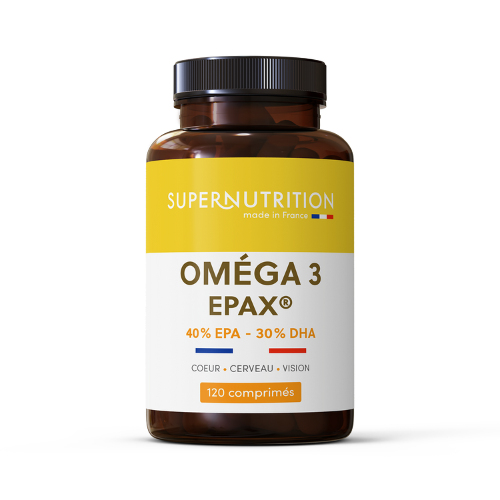
Our expert solution
Our Omega 3 EPAX® provides pure DHA, from certified sustainable fishing and oil with a very low TOTOX index. A solution designed in France for reinforced pregnancy intake.
See our Omega 3What is the omega-3 dosage for a pregnant woman?
ANSES recommends a daily intake of approximately 500 mg of EPA + DHA for pregnant women, including at least 250 mg in the form of DHA.
EFSA specifies its recommendation: 250 mg of EPA + DHA/day for all adults, to which pregnant women add 100 to 200 mg of additional DHA. International clinical guidelines published in 2024 confirm this target. The panel of experts led by Cetin et al. considers that supplementation up to 1,000 mg of DHA per day does not pose a safety problem for pregnant women.
Concretely, a supplementation of 200 to 300 mg of DHA/day is sufficient for expectant mothers who already consume fatty fish. For those whose blood DHA is low at the beginning of pregnancy, international experts recommend 600 to 1,000 mg of DHA + EPA/day until the 37th week.
A very common deficiency in France
According to ANSES, 50 to 75% of pregnant women living in France have an insufficient intake of DHA. Consumption of fatty fish remains low and below recommendations. This data explains why so many health professionals recommend a targeted dietary supplement during pregnancy.
When to start omega-3 supplementation during pregnancy?
Ideally, start as soon as you plan to conceive or at the very beginning of pregnancy, to stabilize DHA levels before the peak needs of the last trimester.
The fetus's DHA needs evolve throughout the trimesters. The 3rd trimester concentrates the most intense phase of brain development, a period during which the baby accumulates up to 70 mg of DHA per day in its brain. Starting early prevents the mother from drawing on her own reserves.
Indicative timeline by trimester
- Preconception and 1st trimester: stabilize DHA status, laying the first foundations for the fetal nervous system.
- 2nd trimester: rapid neuronal growth, increasing maternal needs.
- 3rd trimester: maximum accumulation of DHA in the fetal brain and retina.
- Breastfeeding: DHA passes into breast milk to support the newborn's maturation.
How to choose a quality omega-3 supplement during pregnancy?
A good omega-3 supplement for pregnant women combines five criteria: DHA concentration, oil purity, low TOTOX index, sustainable fishing certification, and traceable origin.
Most supplements on the market show a total oil weight, without specifying the actual proportion of EPA and DHA. This confusion often leads to insufficient omega-3 intake despite daily consumption. Reading the label carefully then becomes the first reflex for the expectant mother.
Quality checklist
- DHA concentration: aim for at least 200 mg of DHA per daily dose.
- TOTOX index: ideally less than 10, indicating a minimally oxidized oil.
- EPAX standard: Norwegian label that guarantees purity, molecular distillation, and traceability.
- Triglyceride form: better assimilated than the ethyl ester form.
- Made in France or French encapsulation: quality control and freshness.
- Absence of heavy metals: independent tests available.
Read also: During pregnancy, the balance of the intimate flora is often weakened by hormonal variations. Discover our probiotic intimate flora treatment to support this daily comfort.
Which food sources of omega-3s should be preferred during pregnancy?
Small fatty fish remain the best source of EPA and DHA for pregnant women. Plant sources provide ALA, which is useful but poorly converted into DHA.
French authorities recommend two portions of fish per week during pregnancy, including one fatty fish. Santé Publique France also recommends diversifying species and limiting large marine predators. These concentrate more mercury, a contaminant to avoid for the baby's neurological development.
Foods to prioritize
- Low-mercury fatty fish: sardines, mackerel, anchovies, herring, farmed trout.
- Plant-based ALA sources: rapeseed oil, flaxseed oil, walnuts, chia seeds.
- Omega-3 enriched eggs (e.g., Bleu-Blanc-Cœur certified).
Foods to limit or avoid
- Swordfish, marlin, shark, bluefin tuna, monkfish: risk of too high mercury.
- Raw or undercooked fish: risk of listeriosis and toxoplasmosis during pregnancy.
- Cod liver oil: too rich in vitamin A, not recommended for pregnant women.
FAQ: Your questions about omega-3s and pregnancy
When to take omega-3s during pregnancy, morning or evening?
The time of day is less important than regularity. Taking it with a fat-rich meal improves absorption and reduces the risk of fishy-tasting reflux. Morning with breakfast or midday with lunch works very well.
What is the best omega-3 for a pregnant woman?
A good omega-3 for pregnancy offers at least 200 mg of DHA per capsule, a low TOTOX index, sustainable fishing certification, and oil in triglyceride form. The EPAX standard, present on our product, combines these guarantees in a single certification.
Can you take vegan omega-3s during pregnancy?
Yes. Oils from microalgae (Schizochytrium sp.) deliver quality plant-based DHA, perfectly suited for vegetarian and vegan diets. They naturally avoid any trace of heavy metals.
What is the difference between EPA and DHA for pregnancy?
DHA is a component of the fetal brain and retinal membranes. EPA acts on inflammation and the mother's cardiovascular balance. During pregnancy, a ratio favorable to DHA is preferred, but both remain useful together.
Can you take too much omega-3 while pregnant?
The international expert panel in 2024 concluded that an intake of up to 1,000 mg of DHA per day does not pose a safety problem for pregnant women. EFSA sets the overall upper limit at 5,000 mg/day. Ask your doctor for advice to adjust the dosage to your specific case.
Does omega-3 help prevent postpartum depression?
Scientific data is mixed. Several studies suggest a benefit of DHA and EPA on the mood of new mothers, while others do not find a statistically significant effect. The tolerability of omega-3s remains excellent, making them an option to consider with a healthcare professional.
Which vitamin should not be taken during pregnancy?
High doses of vitamin A are contraindicated during pregnancy due to the teratogenic risk. Therefore, avoid supplements rich in retinol and cod liver oil. Vitamin A consumed in the form of beta-carotene (carrots, sweet potatoes) remains safe.
Safety advice
Before starting any treatment during pregnancy, ask your doctor, midwife, or pharmacist for advice.
Want to continue reading:
- Omega 3 and sleep
- Omega 3 and cholesterol
- Omega 3 brain
- Omega 3 menopause
- Omega 3 depression
- Omega 3 and intestines
- Omega 3 and weight loss
Scientific sources
- Cetin I, Carlson SE, Burden C, et al. Omega-3 fatty acid supply in pregnancy for risk reduction of preterm and early preterm birth. Am J Obstet Gynecol MFM, 2024;6(2):101251. Link
- Savona-Ventura C, Mahmood T, Mukhopadhyay S, Louwen F. Omega-3 fatty acid supply in pregnancy for risk reduction of preterm and early preterm birth: A position statement by the EBCOG. Eur J Obstet Gynecol Reprod Biol, 2024;295:124-125.
- Frontiers in Nutrition. Omega-3 LC-PUFA consumption is now recommended for women of childbearing age and during pregnancy. 2024. Link
- ANSES. Les acides gras oméga 3 — Avis sur l'actualisation des repères alimentaires du PNNS pour les femmes enceintes ou allaitantes, 2019. Link


