

In 2019, more than 32 million adults aged only 30 to 44 already suffered from osteoarthritis [1]. Because of our modern lifestyle, osteoarthritis is not just a disease of the elderly.
- Omega 3s act as resolving agents (SPMs) that actively extinguish joint inflammation instead of simply masking it.
- Omega-3s do not “cure” osteoarthritis , but they can support joint comfort as part of a broader strategy.
- The effective dosage for osteoarthritis requires a cumulative intake of EPA and DHA that is often higher than conventional nutritional intake.
- The triglyceride form offers superior bioavailability to nourish your synovial membranes and protect your chondrocytes.
Science confirms: a massive intake of EPA and DHA calms the fire of pro-inflammatory cytokines. We've deciphered the cellular mechanisms and the precise dosage . The goal: to restore the Omega-3/Omega-6 ratio to protect your chondrocytes. Your cartilage deserves better than chance. Here are the facts.
Omega-3 and osteoarthritis: What real benefits can you expect depending on your situation?
The effects ofOmega-3 vary depending on your specific needs . These fatty acids, derived from small oily fish, are not a substitute for therapy, but act as precise biological agents within your cells. Identify your profile to tailor your intake and optimize your well-being.
You are looking to reduce discomfort
Your episodes of discomfort result from a cytokine surge in the synovial membrane. A high dose of EPA helps to calm this molecular fire. You will generally notice improved morning mobility after a few weeks of treatment. Joint inflammation decreases through the natural reduction of inflammatory prostaglandins.
Are you looking to protect your joints in the long term?
Are you an athlete ? Preserving your chondrocytes requires a long-term perspective. DHA limits the activation of metalloproteinases (MMPs), enzymes that contribute to cartilage degradation . By stabilizing your cell membranes, you strengthen your joints' resistance to aging. This supports your future mobility.
Are you looking for support during your treatment?
Regular use of omega-3 fatty acids often helps you better manage your current treatment plan . These nutrients support your body in synergy with your usual medical care. They offer a nutritional option to improve your tolerance to daily physical demands. Discuss this with your rheumatologist to incorporate these lipids into your lifestyle.
The opinion of the healthcare professional:
“ Omega-3 fatty acids have anti-inflammatory properties: they act on the production of certain molecules responsible for inflammation and can thus help reduce pain and joint stiffness, in addition to medical treatments. ” — Professor Jérémie Sellam, rheumatologist [2]
What dosage and EPA/DHA ratio should be preferred?
The success of a treatment depends on a high and precise concentration. To influence the biochemistry of osteoarthritis, we aim for a daily intake of 2000 mg to 3000 mg of combined EPA and DHA fatty acids . A ratio skewed towards EPA (often 2:1 or 3:2) promotes a reduction in joint inflammation, while DHA strengthens the structure of your cell membranes.
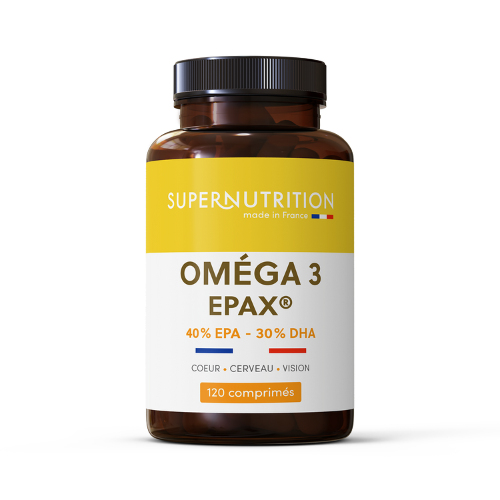
Our expert solution
Our formula targets inflammation with a precise dosage: 800 mg of EPA and 600 mg of DHA per 4 capsules. This ratio promotes flexibility in your daily movements. To act preventively and support your joints against mechanical stress, we recommend taking 5 capsules per day .
Check the label on your supplements: only the actual amount of EPA and DHA matters, not the total weight of the oil capsule. This distinction determines how effective your supplementation will be for your joints.
| Your situation | Target dose (EPA+DHA) | Desired biological benefit |
|---|---|---|
| Stiffness and marked discomfort | 2500 mg - 3000 mg / day | Reduction of cartilage-degrading enzymes (MMP) |
| Support for daily mobility | 1500 mg - 2000 mg / day | Synovial membrane lubrication |
| Preventive protection (Sport/Age) | 1000 mg - 1500 mg / day | Slowing of cellular aging (Chondrocytes) |
Common mistakes: why don't your Omega 3s always work?
Are you taking multiple supplements for your joints without feeling any change ? The problem often stems from an incorrect ratio or a massive underdosing of EPA.
Confusing the weight of the oil with the concentration of EPA/DHA
A 1000 mg capsule of fish oil doesn't necessarily contain 1000 mg of omega-3 fatty acids. Often, it only delivers 300 mg of the active ingredients (EPA and DHA), the rest being fats with no therapeutic benefit for the joints. Read the label carefully: only the combined dose of EPA and DHA truly impacts inflammation in your joints.

Consuming oxidized oils (the TotOx trap)
Omega-3s are fragile molecules. Poor-quality oil oxidizes rapidly under the influence of heat and air, losing its protective properties. Worse, rancid oil increases oxidative stress instead of calming inflammation. A low TotOx value is a guarantee of biological purity for your synovial membranes. At SuperNutrition, our omega-3 has a TotOx value <3 .
Expect immediate results on the joints
Osteoarthritis is a slow process, much like cell regeneration. Unlike a conventional pain reliever, Omega-3 fatty acids work by accumulating in the tissues. Your body needs 8 to 12 weeks to integrate EPA and DHA into your chondrocytes. Regular intake is more important than the potency of a single dose.
Prioritize only plant-based sources
Alpha-linolenic acid (ALA), found in flax or chia seeds, is beneficial for overall health. However, the liver's conversion of ALA to EPA and DHA is too low to significantly impact osteoarthritis. For measurable joint benefits, a direct source from marine sources remains the most effective option, according to current clinical data.
Summary of key points to consider:
- Forgetting to check the actual EPA and DHA content per capsule.
- Ignore the TotOx index, an indicator of the freshness and effectiveness of the oil.
- Stop the treatment before the end of the third month of supplementation.
- Neglecting the Omega 6 / Omega 3 ratio in the overall diet.
- Limiting oneself to plant-based sources (ALA) to treat a specific joint need.
The forgotten factor: why does the effectiveness of Omega 3 vary?
You may have noticed that two people taking the same dosage of Omega-3 get different results. The explanation lies not only in the dose consumed, but also in your metabolism's ability to transform these fatty acids . This internal process is key to your joint comfort.
The conversion of EPA/DHA to SPM: a key mechanism
For Omega-3s to calm inflammation in your joints, your body must metabolize them. This metabolism creates Specialized Pro-Resolution Mediators (SPMs), such as resolvins. These molecules act like biological firefighters, actively extinguishing the inflammation within the synovial membrane.
Why this conversion varies from one individual to another
We are not all equal when it comes to this internal alchemy. Your age, your level of oxidative stress, and your enzyme balance influence the production of these PMS (polymorphic membrane supplements). If your body struggles to convert EPA and DHA, the benefits for cartilage will be less noticeable despite regular consumption of oily fish or supplements.
Direct impact on joint comfort
The presence of SPM in the synovial fluid radically changes the health of your limbs. These mediators don't just block pain; they signal cells to stop attacking your tissues. By promoting the resolution of the inflammatory crisis, you limit the progressive erosion of your joint surfaces.
How to naturally support PMS production
You can help your internal biology function better. Prioritizing Omega-3s in the form of natural triglycerides improves their bioavailability. In addition, a diet rich in antioxidants and low in refined sugars preserves the enzymes responsible for this beneficial transformation for your skeleton and mobility.
FAQ: Frequently asked questions about omega-3 and joints
Can omega-3s regenerate cartilage?
No, science does not indicate any regeneration of worn cartilage. Omega-3 fatty acids slow its degradation by blocking destructive enzymes. They preserve existing cartilage to maintain your mobility without causing tissue regrowth.
How long does it take to see an effect on the joints?
Patience pays off. Allow 8 to 12 weeks for your cell membranes to become saturated with EPA and DHA. This timeframe allows the production of resolution mediators (SPMs) to initiate, providing lasting relief to your tissues.
What is the best EPA/DHA ratio for osteoarthritis?
Opt for a higher EPA ratio. This fatty acid has a more pronounced impact on inflammatory balance. We recommend a product providing approximately 1.5 to 2 times more EPA than DHA to target discomfort associated with osteoarthritis.
Fish oil or plant-based Omega-3 for inflammation?
Plant-based sources provide ALA, which is converted to EPA in very small quantities by the body. For your joints, fish or microalgae oil is superior because it delivers active fatty acids directly without metabolic loss.
Can they be taken with conventional anti-inflammatory drugs?
Yes, they often work well alongside your usual treatments. Their natural action can sometimes help reduce the need for frequent painkillers. As a precaution, always consult your doctor, especially if you are taking anticoagulants.
Do omega-3s relieve osteoarthritis?
Omega-3 fatty acids help reduce pain by regulating the inflammatory response of the synovial membrane. Less internal inflammation means a more flexible joint every day, without major gastric side effects.
Which omega-3 should I choose for my joints?
Choose our Omega 3 in high-concentration triglyceride form. Our formula ensures optimal purity with a low TotOx index, guaranteeing that every milligram of EPA and DHA effectively nourishes your joints.
Security Council
Before starting any treatment, seek the advice of your doctor.
Sources cited in the article:
- [1] Pubmed, 2024 - Global burden of osteoarthritis in adults aged 30 to 44 years, 1990 to 2019: results from the Global Burden of Disease Study 2019 - https://pmc.ncbi.nlm.nih.gov/articles/PMC11027234/
- [2] https://www.topsante.com/medecine/rhumatologie/arthrose-arthrite-il-y-a-un-ingredient-a-eviter-pour-attenuer-la-douleur-selon-un-rhumatologue-930095


