

To reduce systemic inflammation, clinical research recommends a therapeutic dosage of between 2 and 3 grams of combined omega-3 EPA and DHA per day.
The ideal ratio for anti-inflammatory action should favor EPA (often a 2:1 or 3:1 ratio). Benefits on biological markers (C-reactive protein) generally appear after 8 to 12 weeks of continuous supplementation.
Omega 3 dosage: How many mg per day for inflammation?
In summary: To actively regulate an inflammatory response, aim for a daily intake of 2,000 mg to 3,000 mg of combined EPA and DHA. Below this threshold, the effect is limited to general support of the body without altering the membrane balance of your cells.
Target dosage chart: Find your EPA/DHA balance
The secret to effective supplementation lies in the distribution of your fatty acids . While DHA supports your cognitive functions, it's EPA that fights inflammatory molecules. Here's how to adjust your intake according to your current priorities:
| Your goal | EPA dosage | DHA dosage | Suggested use |
|---|---|---|---|
| General Health & Heart | ~250 mg | ~250 mg | Daily balance for basic prevention. |
| Cognitive performance | 400 mg | 800 mg+ | Concentration, memory and mental well-being. |
| Anti-inflammatory action | 1200 to 2000 mg | 600 to 1000 mg | Joints, tendons and muscle recovery . |
| Attack Phase (Expert) | 2000 mg+ | 1000 mg+ | Intense, one-off need over 4 to 8 weeks. |
Why favor EPA for inflammation?
To soothe inflammation, we recommend using oils rich in eicosapentaenoic acid (EPA). This polyunsaturated fatty acid limits the production of chemical mediators that trigger pain. By doubling your EPA intake compared to DHA, you send a clear signal to your immune system to curb excessive processes.
For a cell to stop producing inflammatory molecules, it must saturate its membrane with new fatty acids. Clinical studies ( Source: Science Direct, 2018 ) show that with 500 mg, the membrane change is too slow to counteract established inflammation.
Always check your total daily intake . The sum of your food and supplements should aim for this threshold of 2 to 3 grams of purified marine fats to sustainably transform your physical comfort.
Maintain a consistent intake of 8 to 12 weeks to observe a real effect on your physical comfort. The EFSA confirms that consuming up to 5g of these fatty acids remains perfectly safe. This allows you to maintain complete control over your nutrition without the risk of unnecessary overdose .
How to choose a suitable omega-3 supplement?

Choosing a quality fish oil requires looking beyond the marketing . Many boxes boast about 1000 mg of oil, but only the actual concentration of active ingredients matters for your health. We help you decipher the labels for an informed purchase.
Priority is given to EPA and DHA concentration
The first thing to do is check the precise dose of eicosapentaenoic acid (EPA) and docosahexaenoic acid (DHA) per capsule. If an oil provides 1000 mg of fat but only 300 mg of actual omega-3 fatty acids, you would need to take too many capsules to reach the recommended anti-inflammatory levels.
The triglyceride form for better absorption
We recommend choosing the triglyceride form , which is closer to the natural state of fish. It offers superior absorption compared to synthetic ethyl esters. Although more expensive to produce, this form ensures that fatty acids reach your cells without unnecessary loss.
Freshness and Totox index: the absence of oxidation
The fragility of omega-3 fatty acids makes them susceptible to oxidation . Oxidized fats lose their benefits and can become counterproductive for the body. The Totox index measures this degradation: aim for a level below 10. Certifications like Epax guarantee optimal purity and long-term stability.
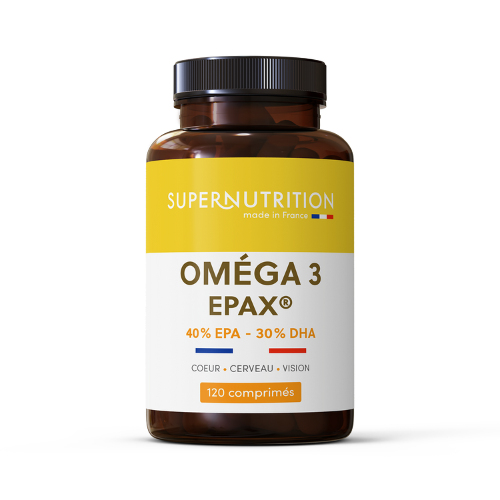
Our expert solution
Our Omega 3 Epax® formula meets these strict requirements with a Totox index of less than 3. This high-quality supplement provides 800 mg of EPA and 600 mg of DHA for easy daily use. In triglyceride form, these marine-based capsules offer exceptional purity to suit your lifestyle.
See our Omega 3What you need to check on your bottle:
- The actual quantity: Total sum of EPA and DHA per dose and not total weight of the oil.
- Marine origin: Favor small oily fish (anchovies, sardines) to limit heavy metals.
- The chemical form: Mention "Triglycerides" (TG) on the label or the merchant site.
- Stability: A low Totox Index guaranteed by a third-party analysis certificate.
- The purity label: Epax or Friend of the Sea to validate the absence of pollutants.
Common mistakes: why your results are stagnating
Despite regular omega-3 supplementation, many people experience no benefit in reducing their inflammation . Several avoidable pitfalls explain this lack of results. We've listed the most common obstacles to help you adjust your dosage.
Confusing plant-based ALA with marine forms
Thinking that flaxseed oil or chia seeds are a substitute for fish oil is a common misconception . These foods contain alpha-linolenic acid (ALA). However, the human body has a very limited capacity to convert ALA into EPA and DHA. For inflammation, always prioritize marine sources.
The imbalance between Omega 6 and Omega 3
Your diet influences the effectiveness of your supplementation. Excessive consumption of vegetable oils rich in omega-6 fatty acids (sunflower, corn) creates competition within your cells. This imbalance blocks the beneficial action of omega-3 fatty acids . To optimize your results, limit processed foods during your supplementation.
Stopping the treatment prematurely
Don't expect an effect in just 7 days. Saturating cell membranes takes time, often between 8 and 12 weeks of daily use . Overdosing at the beginning will only increase the risk of digestive discomfort without accelerating the immune regulation process.
The ratio trap: Florian's experience
" I took an omega-3 supplement for a year for joint discomfort… without any real results. Looking at the label, I understood why: my product was mainly dosed with DHA (more associated with the brain and vision), and almost no EPA, often sought after for supporting joint comfort. By rebalancing to a more suitable ratio with Supernutrition, I finally had an EPA intake consistent with my goal. My recovery and mobility have significantly improved. "
Florian Zorgnotti, a SuperNutrition customer since March 2025.
Why is the Omega-3 Index more important than simple dosage?
The Omega-3 Index measures the concentration of EPA and DHA in your red blood cells . Unlike a standard blood test that captures a single point in time, this tool reflects your nutritional status over the past three months. We consider it a true barometer of your cardiovascular health and inflammation levels.
Achieving an optimal level requires precision. Research indicates that heart-protective benefits and pain reduction appear when this index exceeds 8% . If your score remains below 4%, your body remains vulnerable, even with occasional supplementation. An appropriate daily dosage allows you to saturate your cells for the long term.
For athletes and active individuals, monitoring this index helps personalize their regimen . This figure validates the effectiveness of your diet and supplements. You move from haphazard consumption to a real strategy, ensuring that each capsule directly contributes to your long-term physical and mental well-being.
Why are SPMs considered the next generation of omega-3s?
Stop thinking of omega-3s as simply a pain reliever. Scientific advances show that they act as precursors to SPMs (Specialized Pro-Resolution Mediators). These molecules don't just inhibit signals; they actively "cleanse" the body by completing the inflammatory cycle. This mechanism marks a turning point for your recovery .
When you consume EPA and DHA, your body synthesizes resolvins and protectins . This natural mechanism prevents inflammation from becoming chronic. Sufficient dosage supports this biological transformation, ensuring your tissues return to a healthy state after intense exertion or stress.
This focus on resolution rather than simple elimination explains the interest from the sports world. Optimizing this internal conversion defines the new approach to marine health . Choose a high-quality fish oil to provide the raw material necessary for the success of this biological benefit.
Key takeaways:
- The threshold for effectiveness: Aim for between 2g and 3g of EPA/DHA daily for a real impact on inflammation.
- EFSA indicates that it is possible to go up to 5g per day without risk .
- EPA dominance: Choose an EPA-rich supplement to effectively block inflammatory messengers (cytokines).
- The time factor: Biological benefits appear after 8 to 12 weeks of regular intake.
- The requirement for purity: Only a stable oil ( low TOTOX index ) guarantees therapeutic action without risk of oxidation.
FAQ: Your questions about the anti-inflammatory use of Omega 3
Omega 3s are anti-inflammatory! True or false?
True, omega-3s are indeed anti-inflammatory, but only if the dose is sufficient, EPA is dominant and the conversion to SPMs works well.
Is it possible to take too much Omega 3?
The EFSA sets the safe limit at 5 g of combined EPA/DHA per day. Exceeding this threshold provides no additional benefit and may prolong bleeding time. For most individuals, maintaining a dose between 2 g and 3 g offers the ideal balance without health risks.
Can the therapeutic dosage be obtained solely through diet?
To obtain 2g of active ingredients, you would need to consume 150g of sardines daily. Given the risks of heavy metals and the calorie intake, capsules remain more practical for a therapeutic dose. Diet alone is sufficient for maintenance, but not for intensive action.
Which is the best form of Omega 3: fish oil or krill oil?
Fish oil offers a higher concentration of active ingredients. Krill oil has good absorption, but its dosages are often too low to treat inflammation. A concentrated oil, in triglyceride form, offers the best value for money.
Does coffee negate the benefits of Omega 3?
No, coffee doesn't negate your benefits. However, avoid taking your capsules with just black coffee on an empty stomach. Lipids need a proper meal containing other fats to be correctly absorbed by your digestive system and circulate in the bloodstream.
Do plant-based omega-3 (ALA) supplements have the same effect?
ALA (from flaxseed and chia seeds) is poorly converted into EPA and DHA in your body (less than 5%). While healthy, flaxseed doesn't reach the anti-inflammatory effectiveness of marine sources. For noticeable results, opt for animal-based sources or algae oil.
Is it safe to take omega-3 supplements every day?
Yes, daily intake is key. These fatty acids accumulate slowly in your tissues. Intermittent intake won't saturate your cell membranes. Incorporate them into your routine every morning, year-round, or during periods of physical and mental stress.
What are the signs of an omega-3 deficiency?
Dry skin, persistent fatigue, mood swings, or frequent joint pain indicate a deficiency. Low levels of polyunsaturated fats weaken your cells. Without a blood test, these bodily signals suggest that increasing your intake is beneficial.
Are there any risks or interactions with omega-3?
They slightly thin the blood. Caution is advised if you are taking anticoagulants or have planned surgery. Consult a healthcare professional to confirm your treatment plan. Otherwise, they are very safe and well-tolerated by most people.
What is the dosage for osteoarthritis?
To combat osteoarthritis, aim for 2,500 mg of EPA/DHA, prioritizing EPA to soothe joint sensitivity. Consult our comprehensive guide on the benefits of omega-3 fatty acids to regain your flexibility in the long term.
How do Omega 3s affect the inflammatory process?
They work by replacing pro-inflammatory fats in your cell membranes. By reducing cytokine production, they calm the internal fire. EPA is also converted into resolvins, molecules that actively orchestrate the end of the inflammatory process.
Security Council
Before starting any treatment, seek the advice of your doctor.
Other studies on Omega 3 and inflammation:


