

Key takeaways:
- EPA is involved in the regulation of inflammation and DHA in brain development.
- The “right” EPA/DHA ratio is not universal; it depends on the physiological objective.
- By 2026, 76% of the world's population is below the recommended intake of marine omega-3 (EPA + DHA)[1].
- Our team shows you how to find the best Omega 3 supplement according to your goal.
The difference between EPA and DHA lies in their biological action: EPA reduces inflammation and supports the cardiovascular system, while DHA constitutes the structural fat of the brain and retina.
Although the body produces these molecules via alpha-linolenic acid (ALA) , this conversion rate remains minimal.
What are EPA and DHA? Quick definition and key roles
In short: EPA is primarily anti-inflammatory and supports the cardiovascular system . DHA is essential for the brain and retina .
Each type of fatty acid fulfills a specific biological function in the human body. This table summarizes their primary roles to help you guide your intake.
| Criteria | EPA (Eicosapentaenoic acid) | DHA (Docosahexaenoic Acid) |
|---|---|---|
| Major role | Anti-inflammatory and cardiovascular | Structural and cognitive |
| Targets | Heart, blood vessels, joints | Brain, retina, nervous system |
| Ideal profile | Athletes, heart health, mood | Students, seniors, pregnant women |
| Key claim | Normal heart function | Maintaining normal vision |
Eicosapentaenoic Acid (EPA): Cardiovascular system and inflammation
EPA belongs to the long-chain omega-3 family. It is found primarily in the oil of small fish. Its role as a precursor to series 3 prostaglandins gives it a regulatory function on the inflammatory response in the body.
It helps maintain a stable heart rhythm and contributes to the elasticity of your blood vessels. Sufficient EPA helps maintain normal triglyceride levels, which improves your overall cardiovascular health .
Docosahexaenoic Acid (DHA): Brain and Retina
DHA is a major structural fat. Nearly 90% of the polyunsaturated fatty acids in your brain and 50% of your retina are composed of this molecule.
Its presence ensures the fluidity of your neuronal membranes for smooth brain communication . From birth, and even before through breast milk, DHA contributes to brain development and the maintenance of good memory .
It plays a crucial role in eye health by promoting the normal function of vision cells. In adults and seniors, a sustained intake helps prevent cognitive decline . It doesn't just keep the system running; it constitutes the very physical matter of your nervous system.
Consuming DHA helps maintain the integrity of your intellectual faculties .
Natural sources: Where to find EPA/DHA in food?
Oily fish such as mackerel, sardines, herring, and salmon remain the best animal sources. They accumulate these fatty acids by consuming phytoplankton. To avoid heavy metals, choose wild species lower in the food chain.
Dosage and use: What EPA/DHA ratio is right for your goals?

For a healthy adult, ANSES, EFSA, and WHO recommend a combined daily intake of 250 to 500 mg of EPA and DHA [2]. This daily intake ensures normal heart function and maintains the body's balance. If your diet is lacking in oily fish, taking a supplement can help you reach this protective level.
Table: Which EPA/DHA ratio should you choose according to your objectives?
The ratio of eicosapentaenoic acid (EPA) to docosahexaenoic acid (DHA) determines the effectiveness of the dietary supplement on your body. Here's how to guide your choice:
| Your priority need | Suggested ratio (EPA:DHA) | Dominant molecule | Targeted benefit |
|---|---|---|---|
| Balance & Overall Health | 1:1 | Balance | Maintaining vital functions and daily well-being. |
| Heart & Inflammation | 2:1 or 3:1 | dominant EPA | Regulation of triglycerides and the inflammatory response. |
| Memory & Concentration | 1:3 or 1:4 | DHA dominant | Structure of neuronal membranes and cognitive fluidity. |
| Sport & Recovery | 2:1 | dominant EPA | Reduction of muscle soreness and support of cardiac function during exercise. |
| Pregnancy & Breastfeeding | 1:4 or pure DHA | DHA dominant | Development of the brain and retina of the fetus/baby. |
| Visual Health | 1:2 | DHA dominant | Protection of the retina and maintenance of normal vision. |
Note: For optimal effectiveness in 2026, ensure that your supplementation has a low Totox index (< 10) , guaranteeing the absence of oil oxidation, regardless of the ratio chosen.
Athletes: intake > in EPA
If you engage in intense physical activity, your muscles and joints experience a natural inflammatory response related to exertion. We suggest a higher intake of EPA, approximately 1000 mg per day . This fatty acid actively participates in physical recovery and helps maintain a stable heart rate during exercise.
We recommend the ratio: EPA > DHA (2:1)
Pregnant women: intake > of DHA
During pregnancy and breastfeeding, DHA plays a vital role in building and strengthening tissues. We recommend adding 200 mg of DHA daily to the usual adult dose. This lipid supports the development of your baby's brain and retina. It also contributes to the nutritional quality of breast milk after birth.
We recommend the following ratio: DHA > EPA (1:4)
Seniors: intake > of DHA
As we age, we must pay particular attention to our eye and brain health. An increased intake of DHA helps maintain normal vision and preserves the elasticity of your blood vessels. Consuming sufficient omega-3 fatty acids helps protect your nerve membranes and cardiovascular system naturally.
We recommend the following ratio: DHA > EPA (1:2)
Cognitive support: intake > of DHA
To boost your concentration during exams or intense intellectual work, opt for a diet rich in DHA. A daily intake of 500 mg to 1 g of DHA nourishes your gray matter and improves nerve function. This promotes optimal memory and greater mental clarity every day.
We recommend the ratio: DHA > EPA (1:3)
Overall health / longevity: balanced intake of EPA/DHA
EPA and DHA have complementary roles; neither is dominant for general use. A 1:1 ratio is the natural ratio found in oily fish (sardines, mackerel, anchovies). This is the dosage used in most international recommendations for the general population.
We recommend the ratio: DHA = EPA (1:1)
Our expert solution
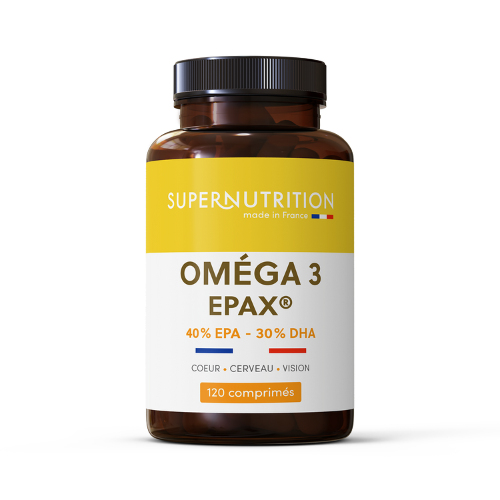
SuperNutrition's Omega 3 Epax delivers a precise dosage of 400mg of EPA and 300mg of DHA per capsule. It's a versatile, mildly anti-inflammatory formula, ideal for a healthy adult, supporting heart health, mood, and everyday use. Certified Totox <3.
See our Omega 3Frequently Asked Questions (FAQ) about EPA and DHA
Can we get enough EPA/DHA through diet alone?
Yes, by consuming two portions of oily fish per week (sardines, mackerel). However, 90% of French people are deficient in omega-3 fatty acids. Supplementation helps ensure an optimal intake without exposure to heavy metals found in large fish like tuna.
When is the best time to take omega-3 supplements?
Take your capsules in the middle of a meal containing fats. The presence of fat stimulates digestion and improves the absorption of polyunsaturated fatty acids. This increases their bioavailability while preventing any unpleasant reflux.
Do EPA/DHA supplements cause weight gain?
No. Despite their oily composition, the energy contribution is minimal (9 calories per capsule). On the contrary, these fatty acids play a role in metabolism. They contribute to better metabolic health without negatively impacting your weight.
How long does it take to feel the effects?
These lipids physically integrate into your cell membranes. While the effect on inflammation can be rapid, we suggest a 3-month course to observe stable benefits on brain function, vision, or skin.
Can ALA (plant-based) be converted into EPA or DHA?
Your body has this capacity, but the conversion rate is negligible (often less than 5%). Consuming a direct marine source remains the only way to obtain a sufficient quantity of these long-chain polyunsaturated fatty acids.
What are the signs of a DHA deficiency?
Eye strain, difficulty concentrating, or very dry skin are common signs. Since DHA is a key component of the retina and nervous system, a deficiency directly affects your cognitive abilities and eye comfort.
Are there any contraindications with anticoagulants?
Omega-3 fatty acids naturally thin the blood. If you are taking anticoagulants, a high dose may increase this effect. Before adding any product to your routine, we recommend consulting a healthcare professional to confirm the correct dosage.
Is it possible to take too much Omega-3?
The EFSA considers a total dose of 5 g per day to be safe. Beyond this, no additional benefits have been demonstrated. Unnecessary excess could disrupt blood clotting. Always follow the dosage recommendations indicated on your packaging.
What is the difference between fish oil and krill oil for DHA?
Fish oil contains triglycerides, while krill provides phospholipids that are often better absorbed. Krill naturally contains astaxanthin, an antioxidant that protects the oil, but its total EPA and DHA content is often lower.
What are the scientifically proven benefits of EPA and DHA?
Science confirms their role in maintaining normal blood pressure and healthy heart function. They also contribute to the baby's brain development and support your immune system by regulating the body's inflammatory mechanisms.
To learn more, visit our guide to the benefits of omega-3 .
How many EPA/DHA capsules should I take per day?
The answer depends on the concentration of your fish oil. Generally, 1 to 2 high-quality capsules are enough to meet the recommended daily intake. Opt for a product with a high concentration of active ingredients rather than taking multiple low-dose capsules.
Are the side effects of EPA/DHA common?
They are very rare. Poor quality oil (high Totox index) can cause fishy-tasting belching. Choosing a fresh, pure ingredient, like those in our range, virtually eliminates any risk of digestive discomfort .
Want to continue reading?
Sources cited in the article:
- [1] University of East Anglia - Nutrition Research Reviews, December 2025
- [2] ANSES, 2025 - Omega 3 fatty acids
Security Council
Before starting any treatment, seek the advice of your doctor.


