

Lion's Mane, or Hericium erinaceus , is a medicinal mushroom used for centuries in Asia. Today, it is attracting scientific interest for its effects on the brain, immunity, and nervous system. But what are its actual benefits ?
Key takeaways:
-
Supports cognitive functions such as memory and concentration.
-
Boosts the immune system thanks to its polysaccharides.
-
Potential aid in regulating mood , stress and anxiety.
-
Neuroprotective action linked to the stimulation of nerve growth factor (NGF).
-
Contribution to digestive health and protection of the gastric mucosa.
The benefits of Lion's Mane studied by science
Used in traditional Chinese and Japanese medicine, the lion's mane mushroom is now being studied for its many properties . Modern scientific research is beginning to validate some of its ancestral uses, particularly its effects on the nervous and immune systems.
Its bioactive compounds, such as hericenones and erinacins, are the focus of numerous studies.

1. Support for memory and cognitive functions
One of the best-documented benefits of Lion's Mane is its impact on cognitive function . Studies suggest that its active compounds, hericenones (present in the mushroom body) and erinacins (in the mycelium), stimulate the production of nerve growth factor (NGF). This protein is essential for the survival, growth, and plasticity of neurons.
Several clinical trials have observed a moderate improvement in memory in adults aged 50 and over with mild cognitive impairment. Supplementation with 3 grams per day for 12 to 16 weeks showed an increase in scores on cognitive tests, although these benefits tend to diminish after discontinuation of the treatment.
Source: https://onlinelibrary.wiley.com/doi/10.1002/ptr.2634
2. Protective action on the nervous system
Beyond memory, Lion's Mane exhibits neuroprotective potential . By promoting NGF production, it could contribute to neuronal regeneration and the protection of the myelin sheath , the covering that protects nerve fibers and ensures proper signal transmission.
This action is particularly beneficial for supporting nerve recovery after mental overwork or intense stress.
In vivo studies on animals have shown that extracts of Hericium erinaceus promote nerve regeneration after injury. Although these results need to be confirmed in humans, they offer promising prospects for maintaining a healthy nervous system.
Source: https://pmc.ncbi.nlm.nih.gov/articles/PMC5987239/
3. Help for mood, stress, and anxiety
Some studies suggest that Lion's Mane may also play a role in mood regulation . A pilot trial conducted on menopausal women reported a reduction in irritability and anxiety after four weeks of consumption.
These effects could be linked to its anti-inflammatory properties and its action on neurogenesis in the hippocampus, a brain area involved in emotion management.
Source: https://www.jstage.jst.go.jp/article/biomedres/31/4/31_4_231/_article
4. Boosts the immune system and reduces inflammation
Lion's mane mushrooms are rich in beta-glucans , polysaccharides known for their immunomodulatory effect. These molecules do not overstimulate the immune system, but help to modulate its activity.
They activate macrophages, cells responsible for eliminating pathogens. This action is relevant for strengthening natural defenses , particularly in athletes whose immunity can be weakened after intense exertion.
Lion's Mane also possesses powerful antioxidant properties that help neutralize free radicals, unstable molecules responsible for oxidative stress and cellular aging. This ability to reduce inflammation could be beneficial in managing various inflammatory disorders.
Source: https://www.researchgate.net/publication/314026786_Immunomodulatory_effects_of_Hericium_erinaceus_derived_polysaccharides_are_mediated_by_intestinal_immunology
5. A contribution to the health of the digestive system
Traditionally, Hericium erinaceus was used to treat gastrointestinal disorders such as gastritis. Preliminary studies indicate that it may help protect the gastric mucosa. Its high fiber content also promotes healthy digestion and supports a diverse gut microbiota, a key factor in overall health.
Source: https://link.springer.com/article/10.1007/s10298-014-0831-5
How to use Lion's Mane effectively?
To incorporate Lion's Mane into your routine, it's helpful to know the different forms available, the recommended dosages, and the best time to consume it. The choice will depend on your preferences and goals.
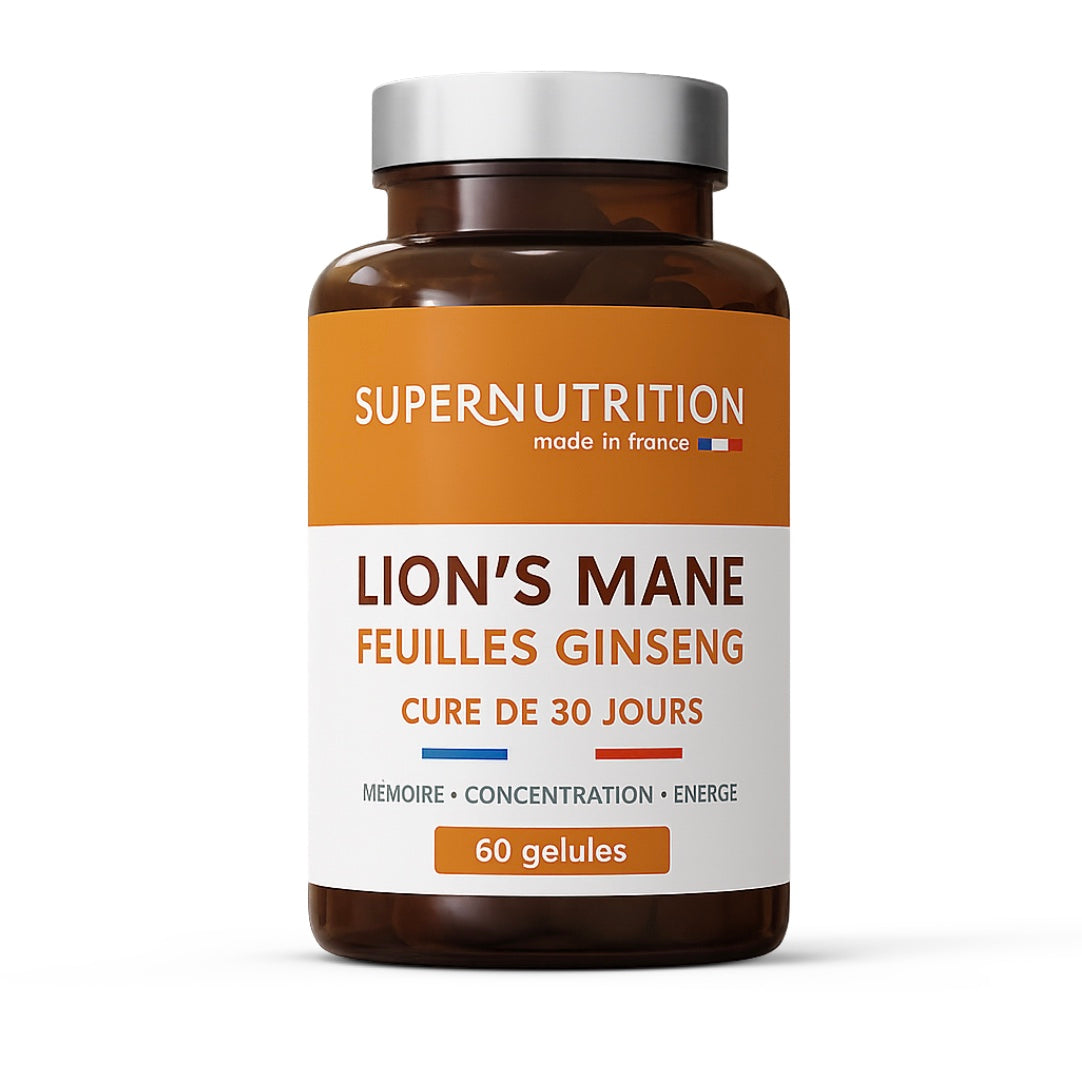
Our synergy for mind and vitality
To take things a step further, we've created a unique formula by combining Lion's Mane with Panax Ginseng. Our Lion's Mane & Ginseng is designed for a dual action: supporting mental clarity and memory with the mushroom, while boosting energy and stress resistance with ginseng. A perfect combination for a sharp and high-performing mind.
Discover our formulaThe different forms available on the market
Lion's Mane is sold in several forms, each with its own advantages and disadvantages. Capsules are convenient and tasteless, powder is versatile and economical, while liquid extracts offer rapid absorption.
|
Format |
Benefits |
Disadvantages |
|---|---|---|
|
Capsules |
Practical, precise dosage, tasteless |
May contain additives, varying concentrations |
|
Powder |
Versatile (drinks, smoothies), economical |
Pronounced earthy taste, less precise dosage |
|
Liquid extracts |
Fast absorption, easy to mix |
May contain alcohol or glycerin, higher cost |
What dosage and duration should a course of treatment take?
The dosage of Lion's Mane varies depending on the form and concentration of the product. Clinical studies generally use dosages ranging from 500 mg to 3 grams per day . For the powder, a dose of 2 to 3 grams is common, while for concentrated extracts, 500 mg to 1 gram is often sufficient.
To see noticeable effects, a 4- to 12-week course is recommended. Since the benefits are cumulative, consistency is key. Some experts suggest taking a one-week break every eight weeks of prolonged use.
The best time to take this mushroom
It is generally recommended to consume Lion's Mane in the morning , with breakfast. Taking it early allows you to benefit from its effects on concentration and mental clarity throughout the day. Taking it with a meal can also improve its absorption and prevent potential gastric discomfort.
What are the risks and precautions to be aware of?
Although Lion's Mane is generally well tolerated, it is essential to be aware of the precautions before starting supplementation. As with any active product, a cautious approach is recommended.
Possible side effects and reactions
The consumption of Hericium erinaceus is considered safe at recommended doses . Reported side effects are rare and usually minor. They mainly include mild digestive issues such as bloating or nausea. Skin reactions may also occur in people allergic to mushrooms.
Contraindications and drug interactions
As a precaution, the use of Lion's Mane is not recommended for certain populations and in certain situations. It is essential to consult your doctor before taking any supplements, especially if you are taking medication.
-
Pregnant and breastfeeding women: due to a lack of sufficient data, consumption is not recommended.
-
People taking anticoagulants: Lion's Mane may have a slight effect on blood clotting. Caution is advised for patients treated with anticoagulants or antiplatelet drugs.
-
Before surgery: it is best to stop taking the medication two weeks before a surgical procedure.
-
Allergies: People allergic to mushrooms should obviously avoid it.
Answers to frequently asked questions
How long does it take to feel the effects of Lion's Mane?
The effects of Lion's Mane are not immediate. It's a gradual process that requires consistent use. Most studies and user feedback indicate that a period of 4 to 12 weeks of daily intake is necessary to begin to see noticeable improvements in focus, mental clarity, and memory.
Is it safe to take Lion's Mane every day?
Yes, daily intake is even recommended to benefit from its cumulative effects, especially during a course of treatment. Some protocols suggest taking a one-week break after 8 to 12 weeks of continuous use to maintain the body's sensitivity to the mushroom's active compounds.
Can Lion's Mane interact with medications such as anticoagulants?
Yes, caution is advised. Lion's Mane may have a mild blood-thinning effect. Therefore, it is crucial to consult a doctor before starting a course of treatment if you are taking anticoagulant or antiplatelet medication, or if you are scheduled for surgery.
Does Lion's Mane really help against age-related cognitive decline?
Clinical studies conducted on elderly individuals with mild cognitive impairment have shown modest but significant improvements in cognitive function. By stimulating nerve growth factor (NGF), it is considered a promising support for preserving neuronal health, but it is not a treatment for diseases like Alzheimer's.
Does Lion's Mane have an effect on sleep quality?
Although its primary action is not sedative, Lion's Mane can indirectly improve sleep. Its regulatory effect on stress and anxiety, documented in some studies, can promote a state of relaxation conducive to falling asleep more easily and enjoying more restful sleep.
Is Lion's Mane considered a doping product for athletes?
No, Hericium erinaceus is not on the World Anti-Doping Agency's (WADA) list of prohibited substances. Athletes can therefore legally use it to support their concentration, nerve recovery, and immune system, which are often severely tested by intensive training.


