

Does your hair look tired, and is its growth slowing down? A magnesium deficiency could be the culprit. This often-overlooked nutrient plays a crucial role in the vitality of your hair .
Here's how magnesium supports your hair health:
-
The benefits of magnesium contribute to the synthesis of keratin, the protein that structures your hair.
-
It improves blood circulation to the scalp, nourishing the follicles.
-
It protects hair cells from premature aging caused by stress.
-
A deficiency can directly accentuate diffuse hair loss.
Magnesium affects hair growth and strength
Magnesium doesn't magically make hair "grow," but it creates an environment conducive to healthy, growing hair. Its action is indirect, but it truly impacts the quality of your hair.
It intervenes through three biological mechanisms that directly influence the vitality of your hair.
Support for the production of keratin protein
The very structure of your hair is based on a protein: keratin . In order for your body to produce it efficiently, it needs to synthesize proteins from amino acids.
Magnesium is a cofactor in more than 300 enzymatic reactions, including those that govern this protein synthesis.
An adequate intake of magnesium therefore supports the production of keratin, resulting in stronger and less brittle hair.
Improving scalp microcirculation
A well-nourished hair follicle is the foundation of healthy hair. Magnesium helps relax the smooth muscles in the walls of blood vessels, promoting their dilation. This action improves microcirculation in your scalp .
Improved blood flow means increased oxygen and essential nutrients, which stimulates bulb activity and supports healthy hair growth .
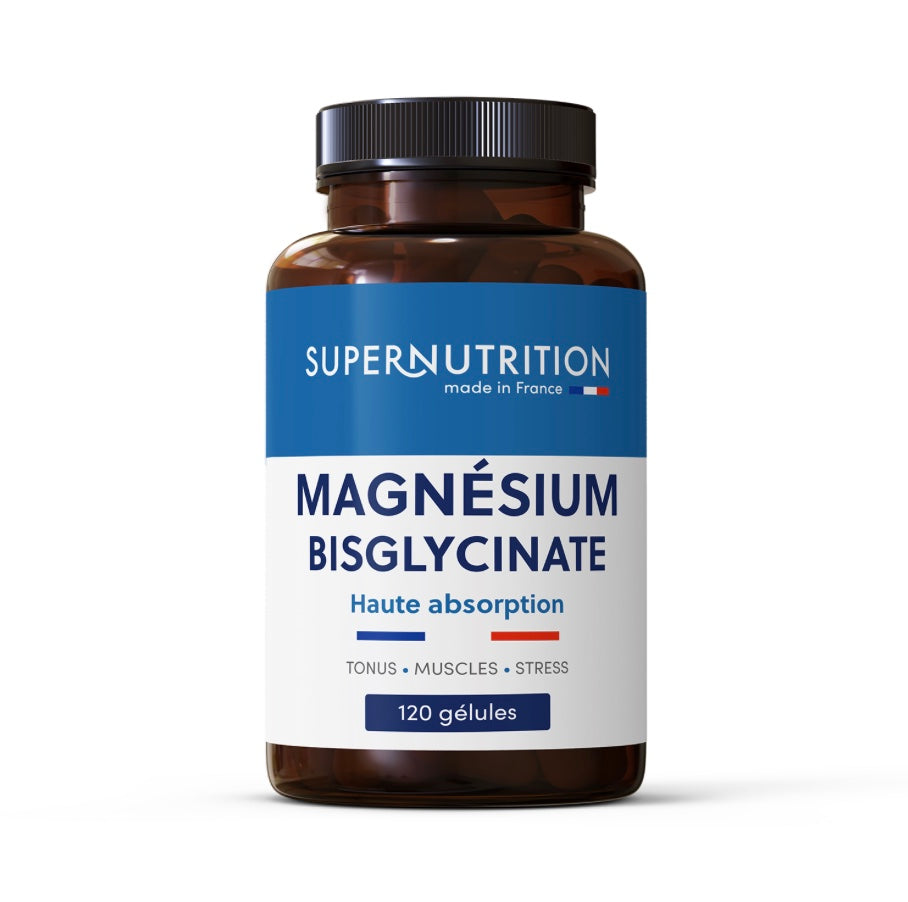
Our expert solution
Opt for Magnesium Bisglycinate , a highly absorbable supplement that helps reduce fatigue, support the nervous system and promote muscle relaxation.
See our Magnesium BisglycinateProtection against oxidative stress of the follicle
The cells in your scalp, like all cells in your body, are exposed to oxidative stress caused by free radicals. This phenomenon accelerates cellular aging and can weaken the hair follicle, leading to premature hair loss.
Magnesium has antioxidant properties that help protect cells from this damage. It thus contributes to preserving the youthfulness and vigor of your follicles.
A magnesium deficiency can affect hair health

A magnesium deficiency rarely goes unnoticed and can have visible repercussions on your overall well-being, as well as on the health of your hair . Identifying the signs and causes of a deficiency is the first step in addressing it.
Signs that indicate a possible magnesium deficiency
A lack of magnesium often manifests as persistent fatigue, nervousness, muscle cramps, or twitching eyelids.
From an aesthetic point of view, you may observe brittle nails , dry skin, but also dull, weakened hair and diffuse hair loss , that is to say a loss distributed over the whole of the scalp and not localized.
Common causes of magnesium deficiency in the body
Several factors related to our modern lifestyle can lead to magnesium deficiency . It is wise to be aware of them in order to better anticipate them:
-
A processed diet, low in whole foods and rich in minerals.
-
Chronic stress , which increases the body's need for and elimination of magnesium.
-
Excessive consumption of coffee or alcohol, which slows down its absorption.
-
Intense physical activity or heavy sweating, which cause mineral loss.
The direct consequences of a deficiency on the hair
When your body lacks magnesium, it prioritizes vital functions at the expense of hair and nails.
The consequences for your hair are concrete: the hair bulb is weakened , the hair growth phase (anagen phase) can be slowed down and hair loss increases, especially during periods of great fatigue or intense stress.
Choosing the right magnesium supplement for your hair
If you choose to take a supplement, not all forms of magnesium are created equal. Choosing a form that is easily absorbed by the body is crucial for achieving results.
Furthermore, combining it with other nutrients can enhance its effect on hair health.
The most effective and easily absorbed forms of magnesium
For optimal results, it is recommended to use third-generation magnesium salts, also known as "organic" or "chelated" magnesium salts. These offer better bioavailability and digestive tolerance than inorganic salts such as magnesium oxide or magnesium sulfate.
|
Form of magnesium |
Assimilation |
Main advantage |
|---|---|---|
|
Magnesium bisglycinate |
Excellent |
Very gentle on the digestive system, ideal for sensitive individuals. |
|
Magnesium citrate |
Good |
A good compromise between adequate assimilation and an affordable cost. |
|
Magnesium malate |
Very good |
Particularly recommended in cases of fatigue, as it participates in the energy cycle. |
|
Magnesium oxide |
Weak |
To be avoided, as it is poorly absorbed and often poorly tolerated (laxative effect). |
The combinations of nutrients that enhance its action
For a holistic approach to hair health , magnesium benefits from being combined with other nutrients. B vitamins , particularly B6 (which facilitates magnesium absorption into cells) and B8 (biotin), are essential for hair growth.
Zinc and iron are also minerals that play a major role in preventing hair loss and strengthening the follicle. Finally, sulfur-containing amino acids (cysteine, methionine) are the building blocks of keratin.
Incorporating magnesium into your skincare routine
To maintain adequate magnesium levels, you can use two complementary approaches: a targeted diet and, if necessary, occasional supplementation. These simple habits nourish your hair from within.
The best food sources for a natural intake
The best source of magnesium is a varied and balanced diet. Regularly include magnesium-rich foods in your meals.
Consider, for example, oilseeds such as almonds and Brazil nuts , cocoa (dark chocolate with over 70%), legumes such as lentils , certain fruits such as bananas , leafy green vegetables such as spinach , and whole grains. Some mineral waters are also very rich in magnesium.
The use of dietary supplements in targeted treatment
A magnesium-based hair supplement can be a valuable aid, especially during seasonal changes, periods of stress, or intense fatigue. A course of treatment typically lasts from 4 to 8 weeks .
For better absorption and tolerance, it is recommended to take your supplement with a meal. Before starting any course of treatment, it is always advisable to consult a healthcare professional, especially if you are pregnant, breastfeeding, or undergoing medical treatment.
Frequently Asked Questions about Magnesium and Your Hair Health
How soon can I expect to see results on my hair?
The effect is visible on new growth. Given the hair growth cycle, it takes 3 to 6 months to see a real difference in density and strength from the roots. Be patient; magnesium works from the inside out over the long term.
Can I apply magnesium directly to my scalp?
Magnesium oil can stimulate local microcirculation. However, its effectiveness on hair growth is less well-documented than when taken internally. Prioritize oral intake (food, supplements) to nourish the follicle from within, a more fundamental action.
Can an excess of magnesium cause hair loss?
No, excess magnesium is not a known cause of hair loss. The body eliminates the surplus, mainly causing digestive problems. However, an overdose of other nutrients, such as vitamin A or selenium, can cause hair loss.
Is magnesium the most important mineral against hair loss?
It plays a crucial supporting role, but not the primary one. In the event of a fall, iron (ferritin) and zinc deficiency is often the first cause to investigate. Magnesium helps optimize the overall environment, but it is not the sole solution.
Want to continue reading?
- Magnesium and the liver: what is the link?
- Is magnesium good for memory?
- Magnesium may have an impact on osteoarthritis
- Diabetes and magnesium: what you need to know
- Is magnesium good for high blood pressure?
-
Which magnesium should I choose to prevent migraines?
-
Can I take magnesium if I have glaucoma?
- Weight loss and magnesium: what you need to know
- Is it possible to take magnesium while breastfeeding?
- Is it safe to take magnesium during pregnancy?
- Can magnesium relieve irritable bowel syndrome?


